All products Decision layer Data collection Trip Counting Module
Active safety and control
Engine and thermal management

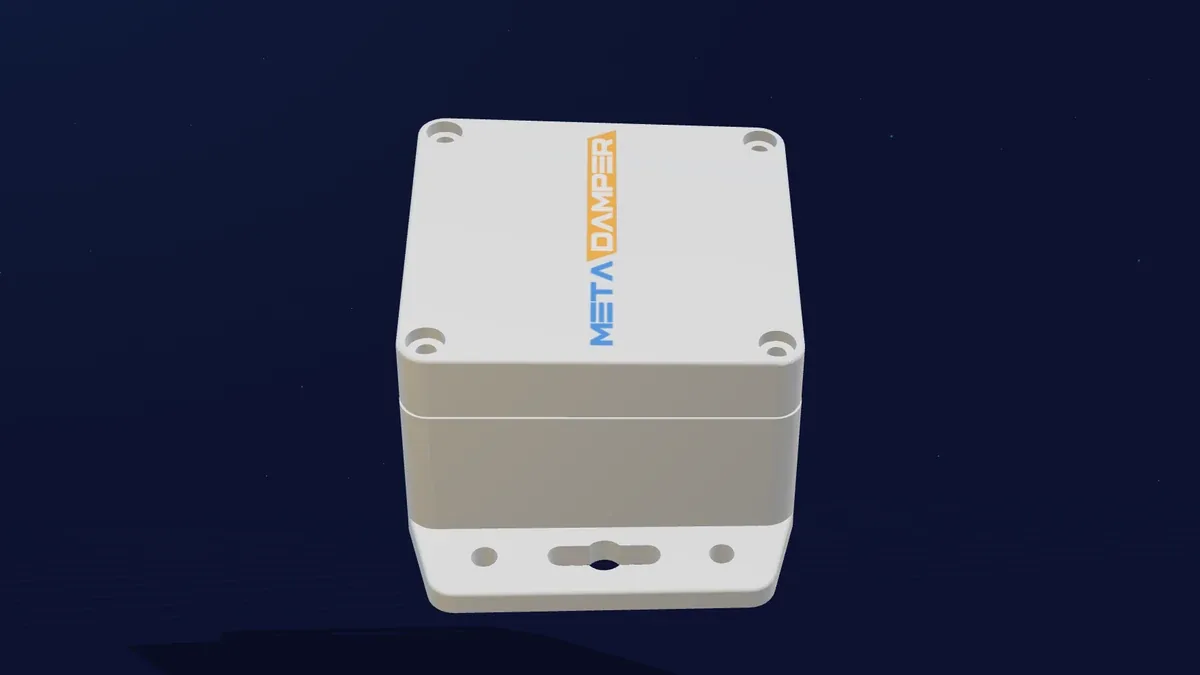
MetaDamper Tilt alarm and lift inhibit

It measures the ground first.

A tilt alarm with lift inhibit that checks the slope before tipping

MetaDamper

Why do tippers overturn?

Most rollovers start with things the driver cannot see from the cab: a slight slope, ground that gives way, a load piled to one side or a tailgate that fails to open. As the body rises, the load's centre of gravity climbs, and a few degrees that are harmless on the road become critical with the body in the air.

Sloping ground

When the body is raised on uneven ground, the load leans towards the slope. Small gradients are invisible from the cab.

With MetaDamperSideways tilt (5° by default) and longitudinal slope (13° by default) are monitored continuously. Past either threshold the driver gets a light and buzzer warning and the body stops rising.

Ground that gives way

Loose fill collapses, a wheel sinks or the suspension leans the truck. With the body raised, a few degrees of sideways tilt can start a rollover.

With MetaDamperIf a wheel sinks while the body is rising and sideways tilt passes 5°, lifting stops and automatic lowering is triggered.

A tailgate that stays shut

The load cannot slide out, the weight gathers at the rear and the truck rears up. The risk grows when the dumping point is on an embankment edge.

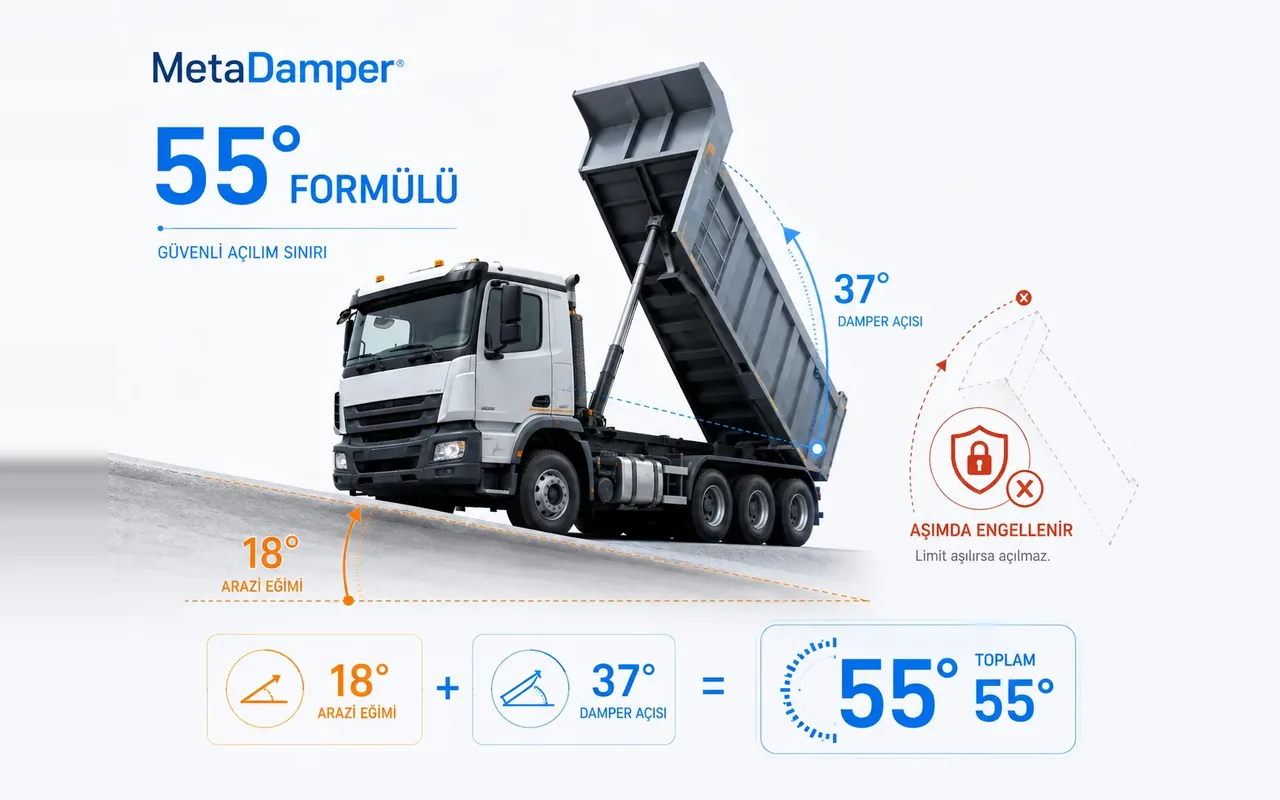
With MetaDamperWith the wireless tailgate sensor, the body does not rise until the tailgate is open. The wireless body sensor keeps rearward slope plus body angle within 55°.

A body left raised on the road

If the body is left up or the control lever is knocked by accident, the truck can strike an overpass, a bridge or a power line.

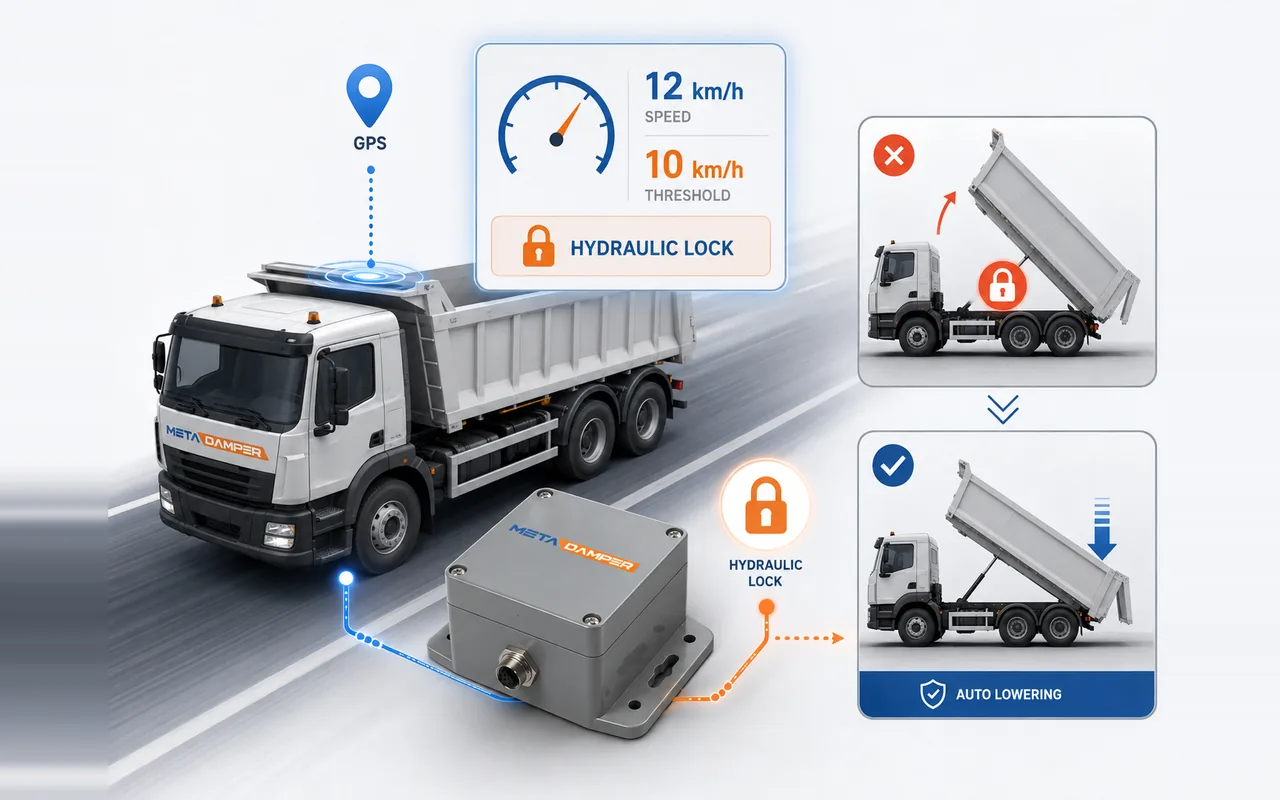
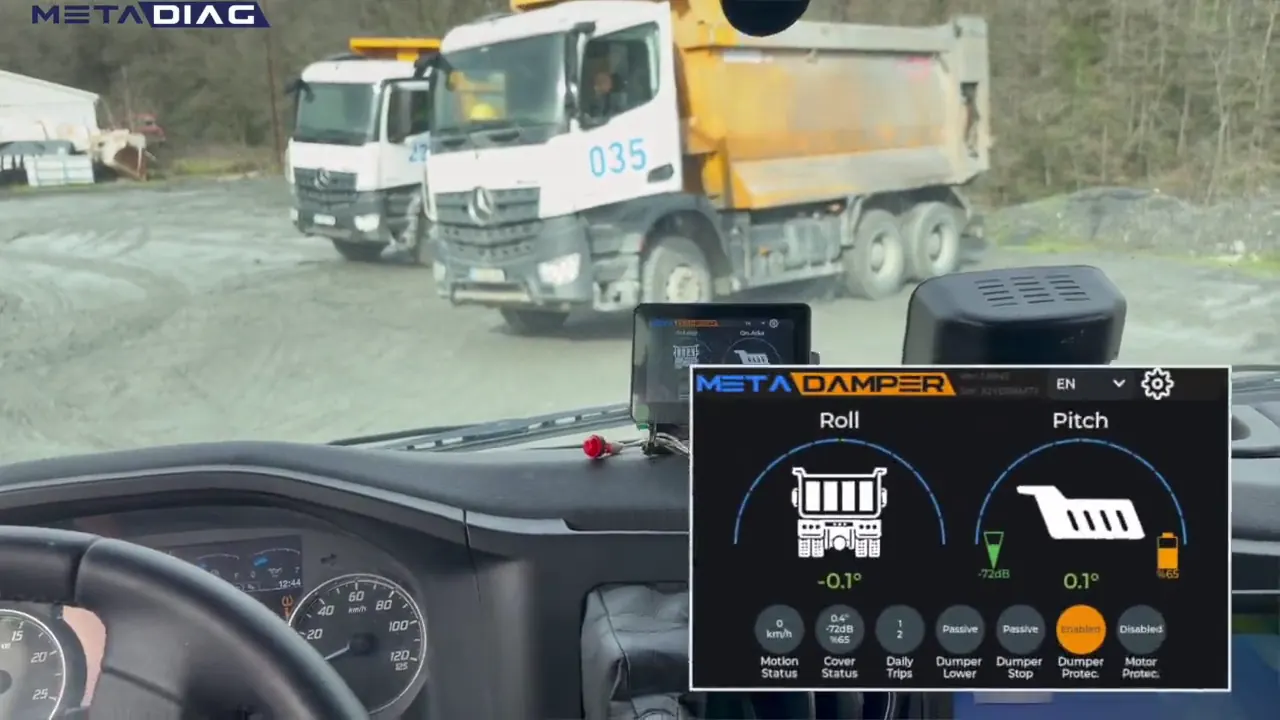
With MetaDamperWith motion control (the 4.3″ display or the Motion Control Module), the body stays down while the truck is moving (above 10 km/h by default). If the truck moves with the body up, the body is stopped and lowered.

Three questions, asked in order

MetaDamper does not leave the decision to the driver's eye. When the driver asks to tip, it checks three things in sequence, and every axis limit applies at the same time.

Transit lock: speed 12 km/h, threshold 10 km/h; the hydraulic lock keeps the body down and a raised body is lowered automatically
55° formula: 18° ground slope + 37° body angle = 55° in total. If the limit is exceeded, the body does not rise.
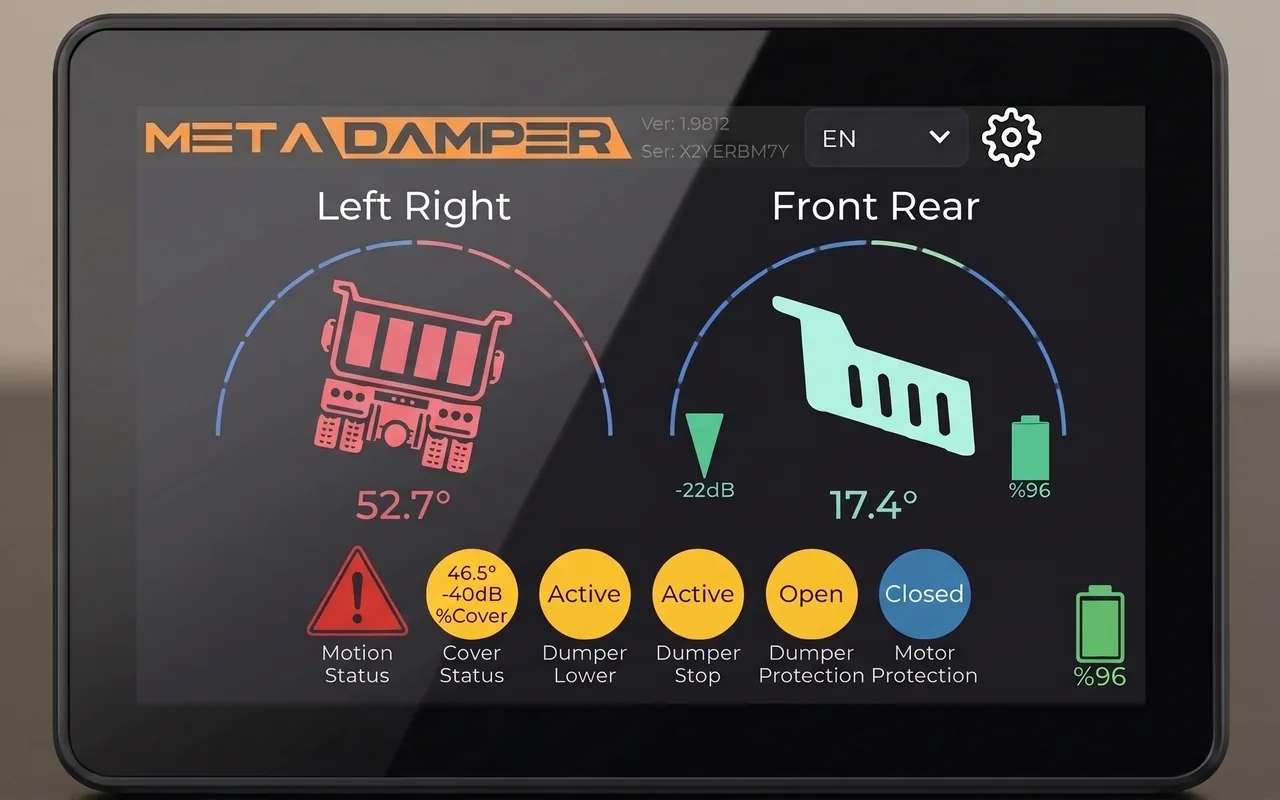
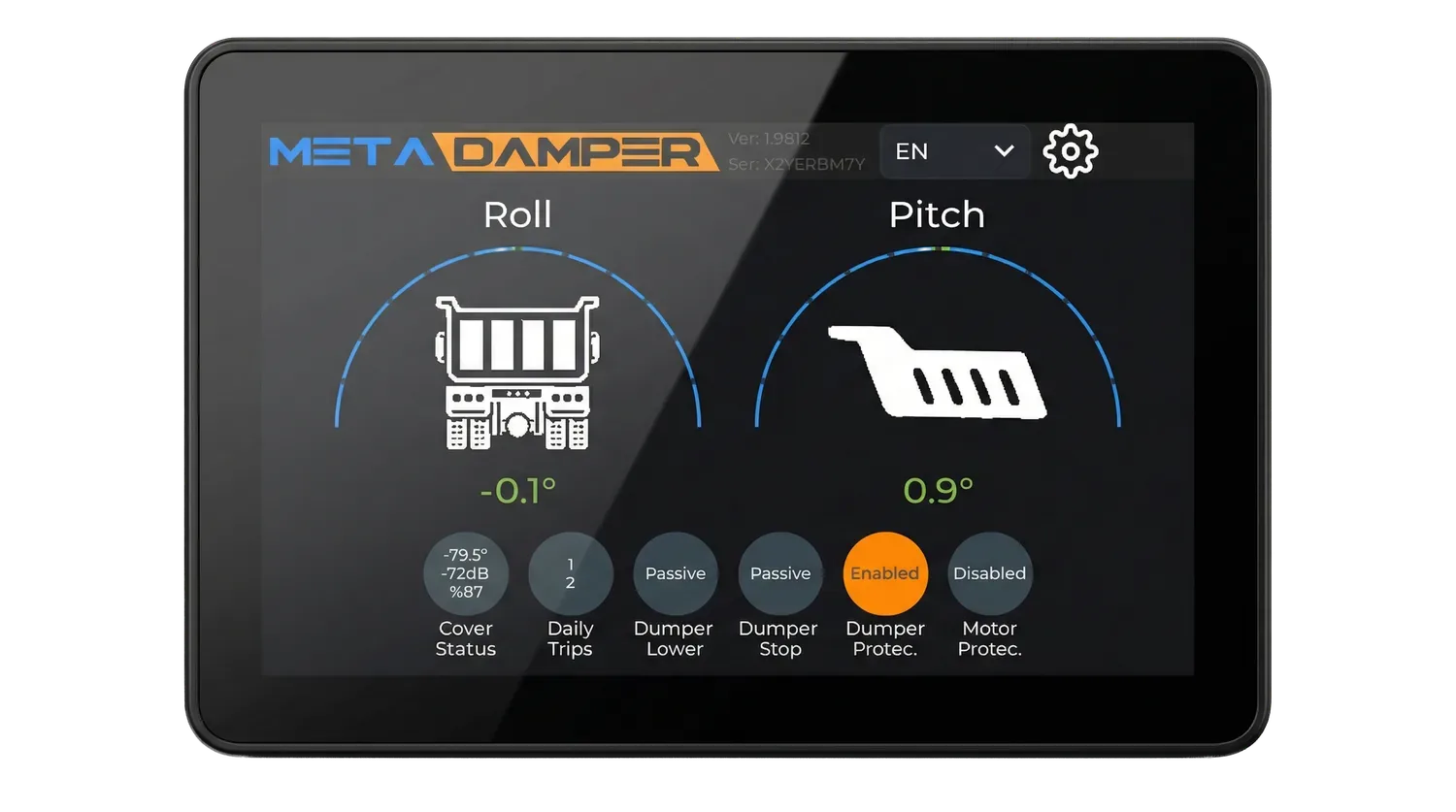
Cab display: lateral tilt reads 52.7° in red, and Dumper Lower and Dumper Stop are active
  1. Transit lock: speed 12 km/h, threshold 10 km/h; the hydraulic lock keeps the body down and a raised body is lowered automatically

    Can it rise now?

    If the truck is moving or the tailgate has not opened, the body stays down. Motion control comes with the 4.3″ display or the Motion Control Module; tailgate control comes with the Wireless Sensors package.

  2. 55° formula: 18° ground slope + 37° body angle = 55° in total. If the limit is exceeded, the body does not rise.

    How far can it rise?

    With the Wireless Sensors package, rearward slope plus body angle stays within 55°: on a 10° ramp the body stops at 45°.

  3. Cab display: lateral tilt reads 52.7° in red, and Dumper Lower and Dumper Stop are active

    Must it come down now?

    If the truck leans more than 5° sideways or the longitudinal slope passes 13°, lifting air is cut and lowering is triggered.

Try the decision yourself

Change the ground slope, body angle and speed, and see what MetaDamper does with its default thresholds.

Side view
Body angle reached0°
Combined angle0°
Lateral tilt0°
Safe: tipping can go ahead
Package
plus: tail down, minus: nose down
Scenarios

The simulation uses default thresholds and is for illustration; thresholds are set for each truck and site at installation.

Packages

The Standard Module is the core; the Wireless Sensors and display packages build on it. Click a feature to see what it does.

Standard Module

Core tilt protection for every tipper

+ 4.3″ Touchscreen

Trucks that use public roads, operators who need safety reporting and fleet tracking, public fleets

The Standard Module does not measure body angle; combined-angle and tailgate control come with the Wireless Sensors. Lowering on the move comes with the 4.3″ display; on a truck without a display it is added with the Motion Control Module (CAN-GPS). The Motion Control Module and the Trip Counting Sensor can be added in the package builder below.

Build your package. Choose protection to suit your truck.

The Standard Module is the base on every truck. Add packages for where the truck works, and click any feature to see what it does.

Animation
Standard Module 6-axis sensor fusion The accelerometer reads tilt against gravity; the gyroscope reads rotation speed. Fused together they stay stable on vibrating sites.
Animation
Standard Module Stops lifting when at risk Once lateral tilt passes 5° or the longitudinal slope passes 13°, the air that lifts the body is cut. Protection does not depend on the driver noticing the warning; thresholds can be set at installation.
Animation
Standard Module Automatic lowering If the risk appears after lifting has started, for example when a wheel sinks, lowering is triggered: through a valve on hydraulic-lowering trucks, directly on electric-lowering ones.
Animation
Standard Module Light and sound alerts Red and green LEDs and a buzzer in the driver's line of sight give a tip stability warning. The status is clear at a glance.

Animation
Standard Module Black box Tilt values, body movements, alerts and interventions are recorded with timestamps. With these tipper intervention records, any review after an incident rests on data.
Standard Module Wi-Fi interface and site-specific calibration The unit broadcasts its own Wi-Fi network. Thresholds are set for each truck and site, and calibration is done on level ground.
Different kinds of tipper vehicles side by side: 8×4 and 6×4 tipper trucks, a tipping semi-trailer and a small municipal tipper (representative image)
Standard Module Every tipper truck brand Fits tipper trucks, semi-trailers and trailers regardless of make. Pneumatic and electric tipping controls are covered by the same product. The pneumatic valve set, trailer cable and socket are in the box.
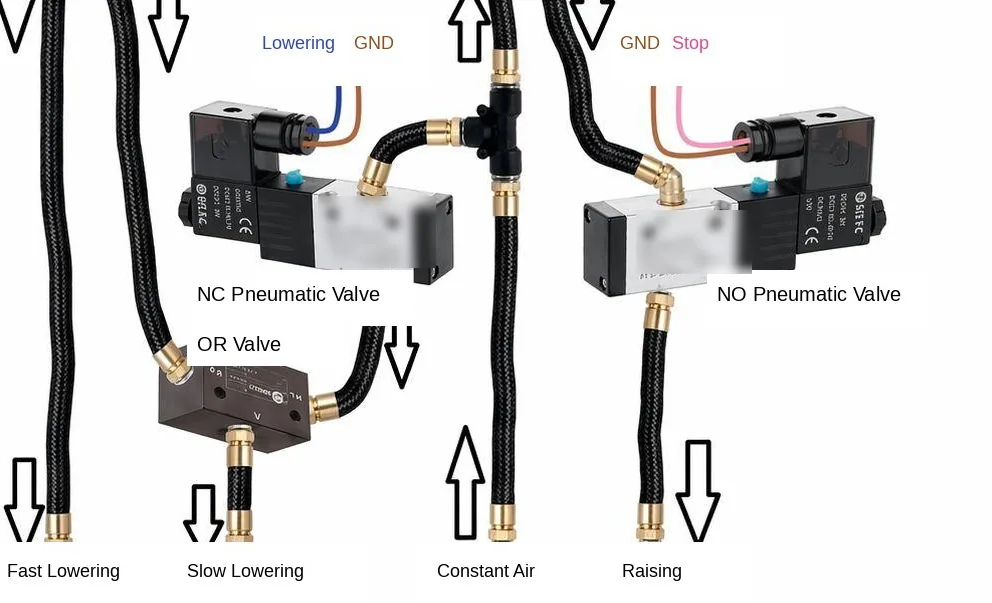
MetaDamper pneumatic valve set: NC and NO pneumatic valves, OR valve and air hoses
Standard Module Pneumatic valve set, trailer cable and socket The pneumatic valve set, air hose and T-connector in the box connect to the truck's existing tipping air line; the truck's own tipping button is kept. On trucks with electric lowering, the lowering trigger is wired directly. The trailer link cable and socket are in the box as well.
Animation
With Wireless Sensors Combined angle 55° and rearward rollover lock The wireless body sensor under the bed combines ground slope with body angle. As the slope grows, the body's allowance shrinks automatically; if the truck settles backwards, the body is pulled back.
Animation
With Wireless Sensors Lowering when the forward slope passes 5° If the truck slopes forward by more than 5°, the body is stopped and lowered straight away.
Animation
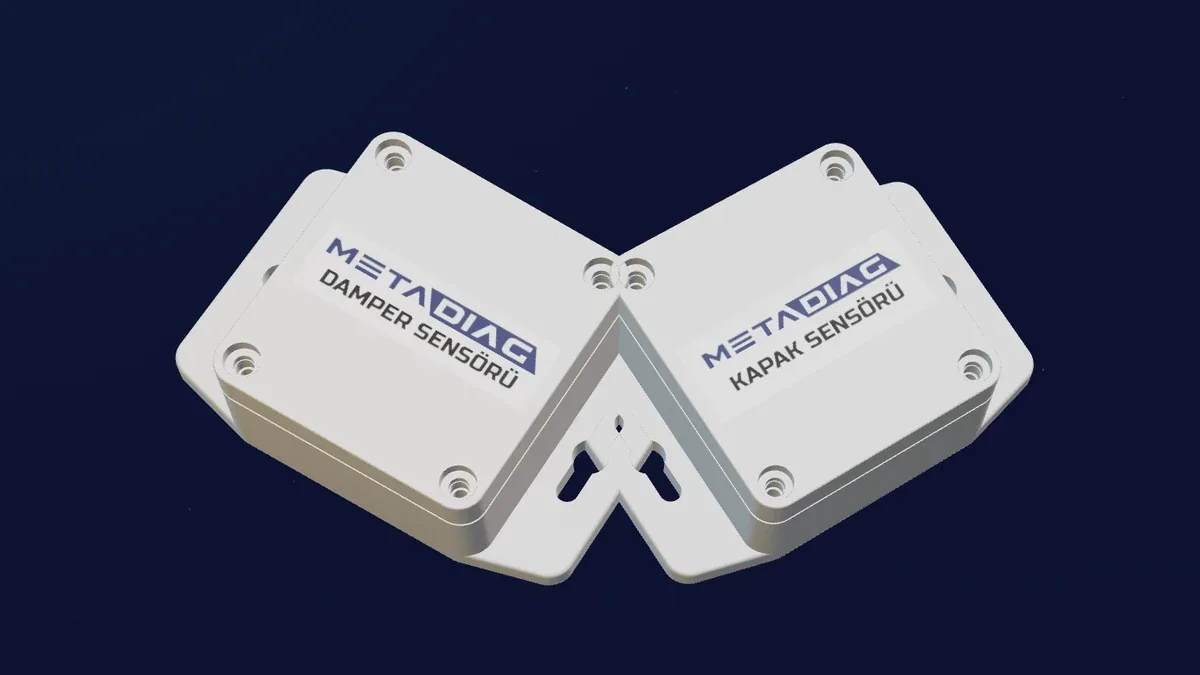
With Wireless Sensors Tailgate sensor The body will not rise until the tailgate is open, and hydraulic piston faults are detected. Not recommended for chain-operated or manual tailgates.
Animation
With 4.3″ Touchscreen or Motion Control Module (CAN-GPS) Lowering on the move (transit lock) Road While the truck is moving (above 10 km/h by default) the body will not rise, and a body left up is stopped and lowered. Speed comes from the 4.3″ display or, without a display, from the CAN-GPS data of the Motion Control Module. The threshold can be set at installation.
With 4.3″ Touchscreen Angles, speed and status in the cab Lateral and longitudinal angles, vehicle speed, tailgate status, the day's trip count and the lower, stop and protect states are shown on the cab screen.
With 4.3″ Touchscreen Self-diagnostics The unit reports its own faults on the screen as they happen, such as a sensor connection, power or communication loss. Protection never looks active when it is not.
A driver fills in the daily checklist on the cabin display before the shift (representative image)
With 4.3″ Touchscreen Tipper daily checklist Before starting the day, the driver completes the checklist on the display. Through the MetaDamper–MetaFMS integration, answers reach the fleet panel, where any unexpected answer is flagged in red.
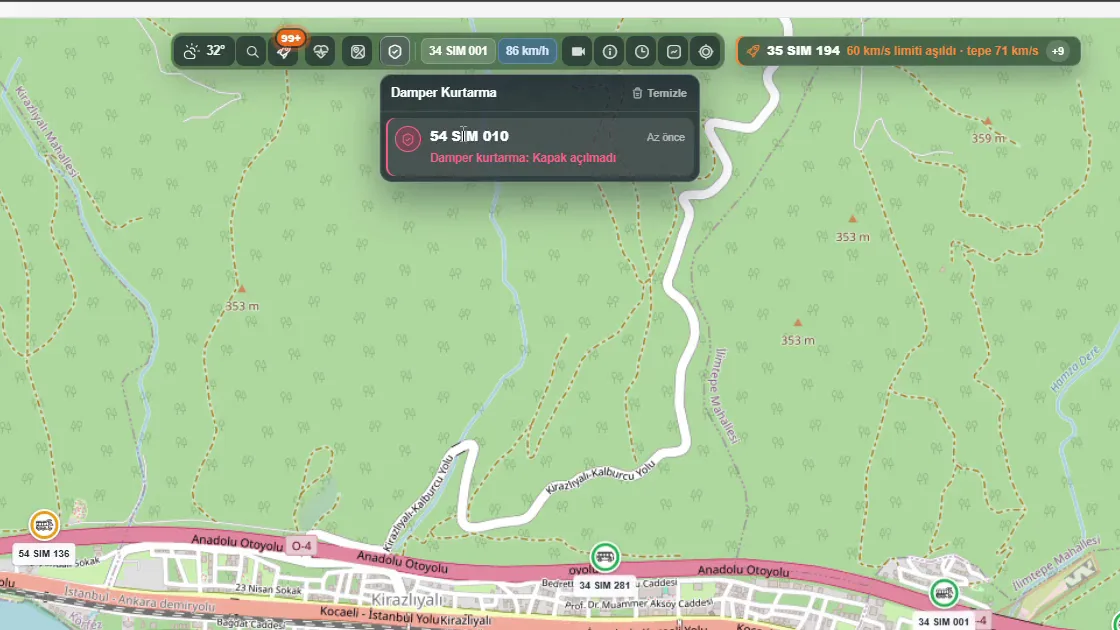
With 4.3″ Touchscreen Tipper events in MetaFMS With the display package, tipper interventions and checklists reach the MetaFMS fleet panel; an intervention appears as a notification on the live map and is listed by type.
Animation
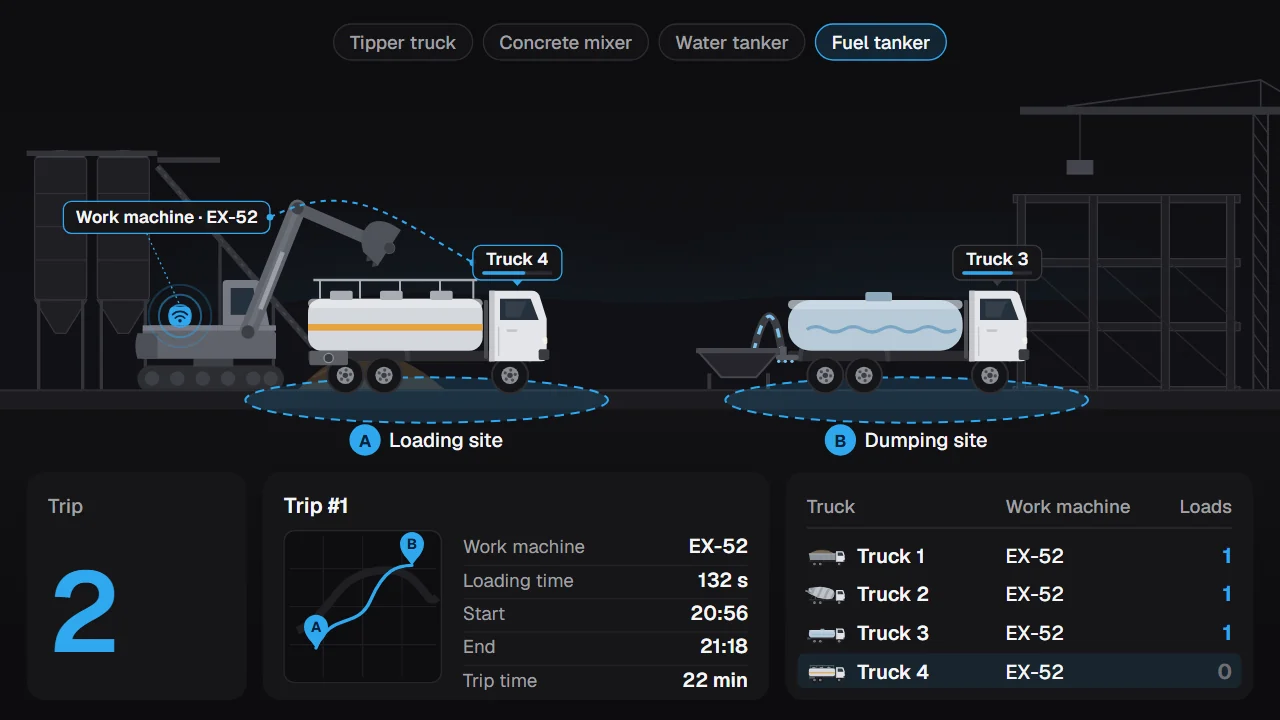
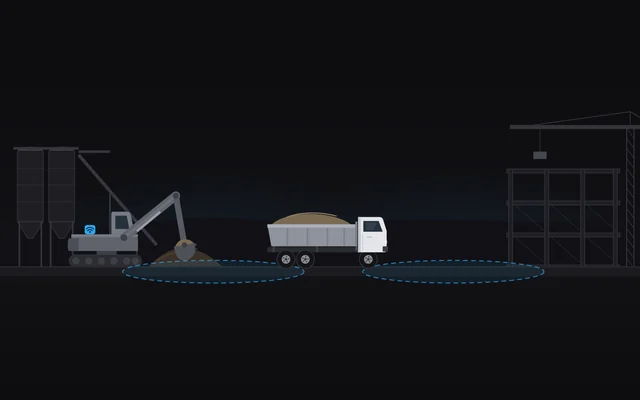
With Trip Counting Sensor Trip counting and machine matching With a sensor on the loading machine, each trip's start and end points, loading and trip times, and the truck and machine are recorded together. The report shows how many times each truck was loaded. Explore Trip Counting Module
Where it works. Where does the truck work?

Packages. Start with the Standard Module and add what you need.

On every truck

Included once you add the package

Included once you add the package

Explore Trip Counting Module

Summary. Does everything look right?

  • Standard ModuleOn every truck
  • Wireless Sensors
  • 4.3″ Touchscreen
Where it worksOn site and on public roads

The Standard Module does not measure body angle; combined-angle and tailgate control come with the Wireless Sensors package. For lowering on the move, vehicle speed comes from the 4.3″ display or the Motion Control Module. The final configuration is set during the site survey.

From the field

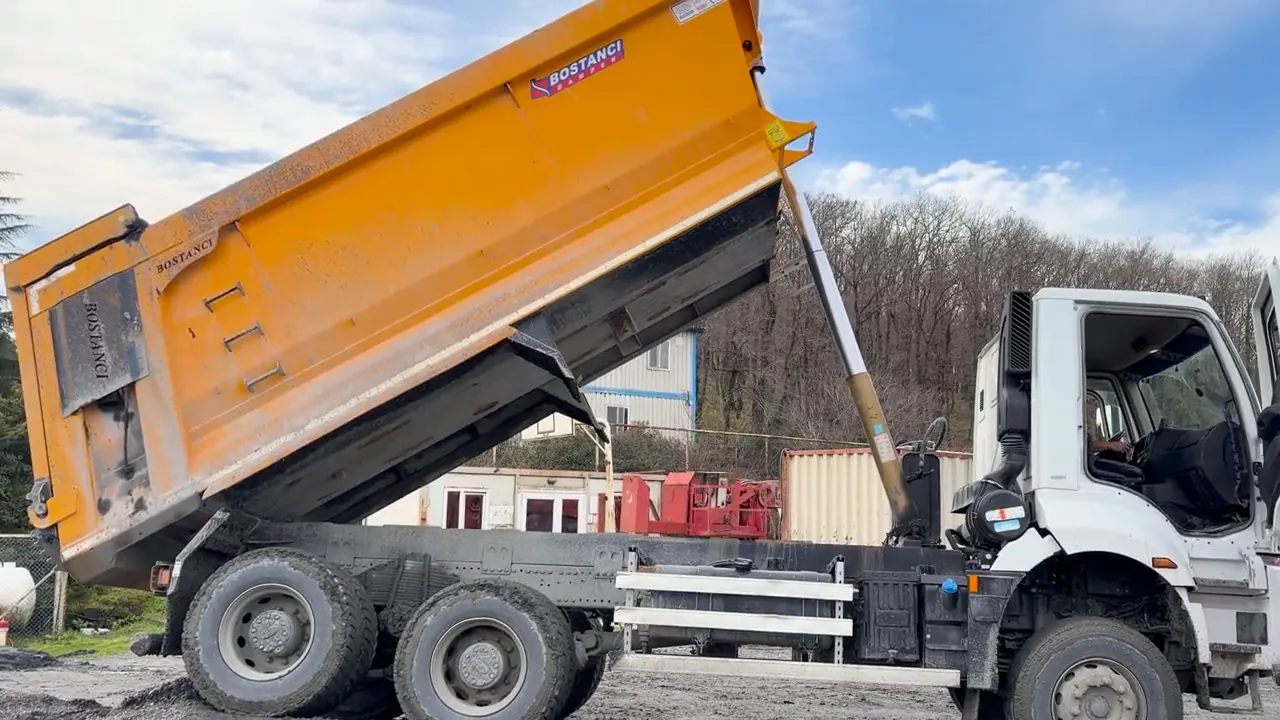
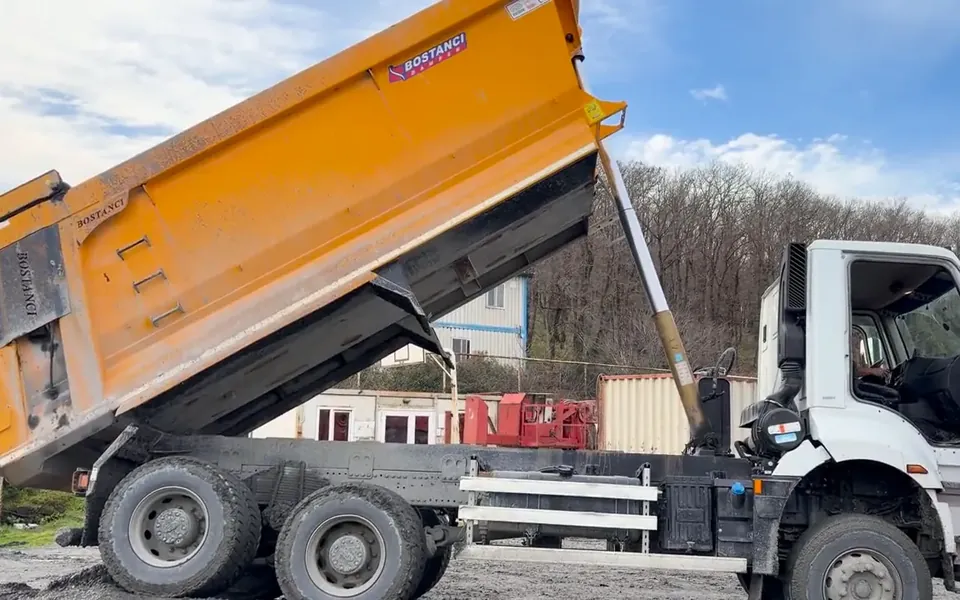
A MetaDamper-equipped truck tipping on site
A MetaDamper-equipped tipper on site, body raised
A MetaDamper-equipped truck on site

Where it works

A tipper truck leaning to one side on soft fill

Construction and earthworks

A wheel sinks into fresh fill and the truck leans 6°: lifting stops and the body comes down.

Trucks and excavators working in an open pit, aerial view

Mines and quarries

On a 10° ramp the body stops at 45°; the combined-angle limit holds under heavy loads (with the Wireless Sensors package).

A tipper truck with its body raised, unloading on site

Road building and infrastructure

At the edge of an embankment the tailgate did not open, so the body did not rise (with the Wireless Sensors package).

A truck with its body raised hits an overpass (illustrative image)

Municipal and public fleets

On a moving truck in the city the body cannot rise, closing off the overpass risk (with the 4.3″ display or the Motion Control Module).

A concrete mixer, a tipper truck, a wheel loader and an excavator side by side

Mixed-brand fleets

An unexpected checklist answer shows red on the panel, and the truck is inspected before it goes out (with the 4.3″ Display package).

A bulk stockyard and a reclaimer at a port terminal

Ports, depots and logistics

The same alert discipline across dozens of tipping cycles a day.

Technical specifications

Standard Module

Operating voltage
9–34 V DC
Operating temperature
−40 °C … +85 °C
Ingress protection
IP68
Sensor
6-axis gyroscope and accelerometer
Default thresholds
Lateral 5°, longitudinal 13° (adjustable)
Outputs
Stop trigger, lower trigger, signal, LED/buzzer
Vehicle bus
CAN-H / CAN-L
Interface
Local Wi-Fi: status, thresholds, calibration
Maximum power draw
13.92 W
Mounting point
Rear centre of the chassis
Warranty
1 year, materials and workmanship
Declared service life
5 years

Wireless Sensors

Body sensor
Fitted under the body
Tailgate sensor
Fitted to the tailgate
Combined angle limit
Rearward slope + body angle ≤ 55°
Forward slope
Body is lowered above 5°

Motion control

Speed source
4.3″ display or Motion Control Module (CAN-GPS)
Transit lock
Above 10 km/h (adjustable)

Cab display

Screen
4.3″ touchscreen
Functions
Tilt and body angle, transit lock status, daily checklist, self-diagnostics

Thresholds are factory defaults and can be adjusted to each truck and site at installation.

Certificates

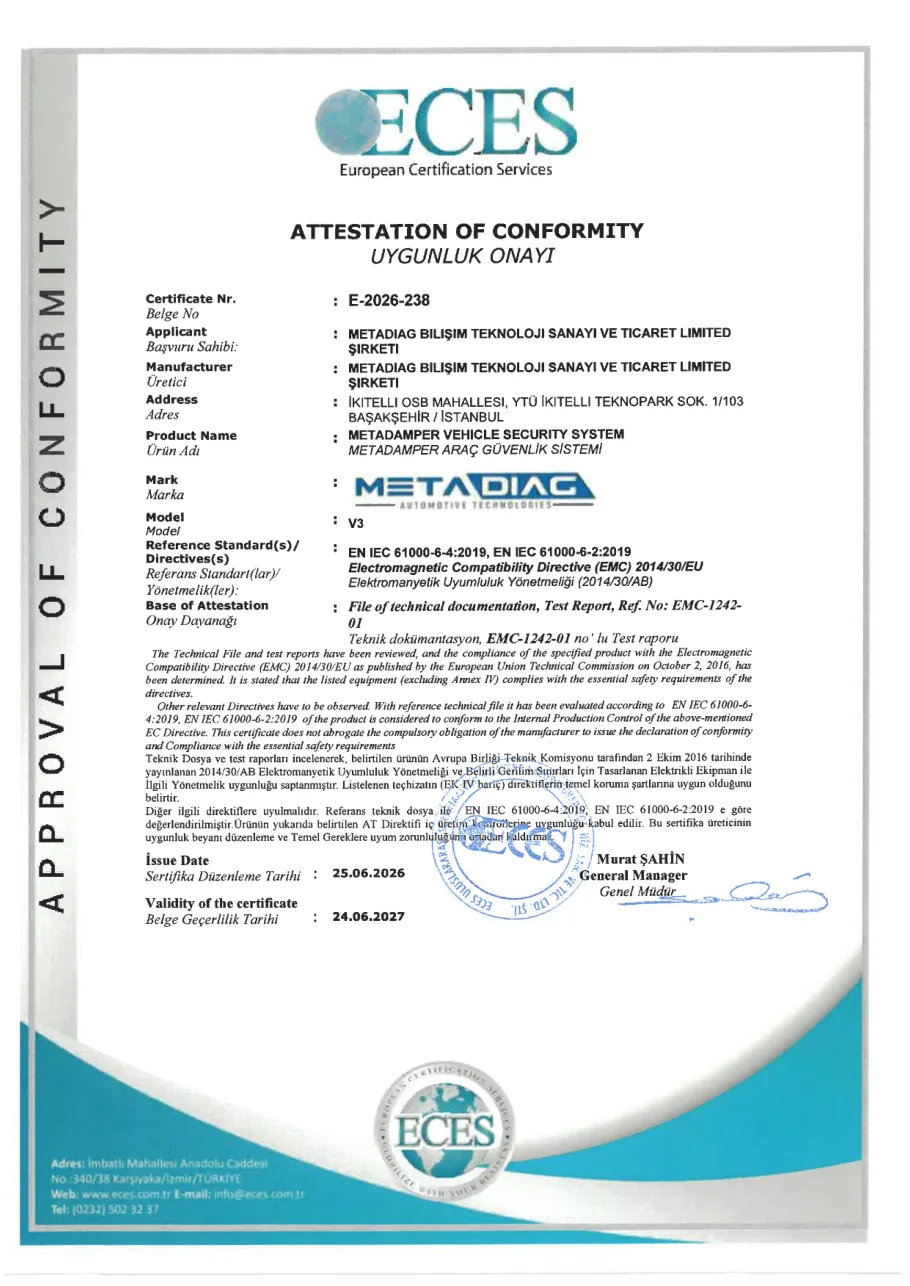
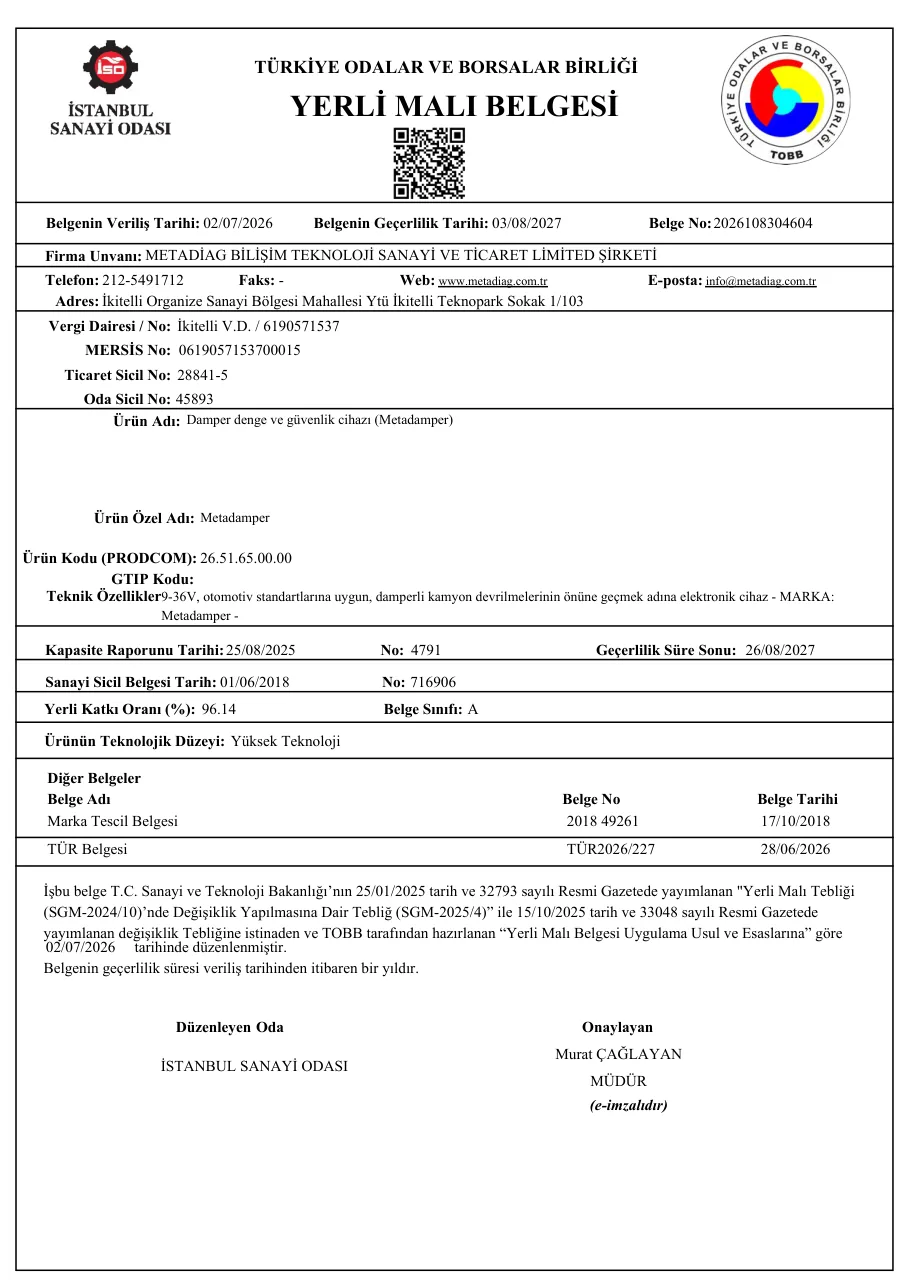
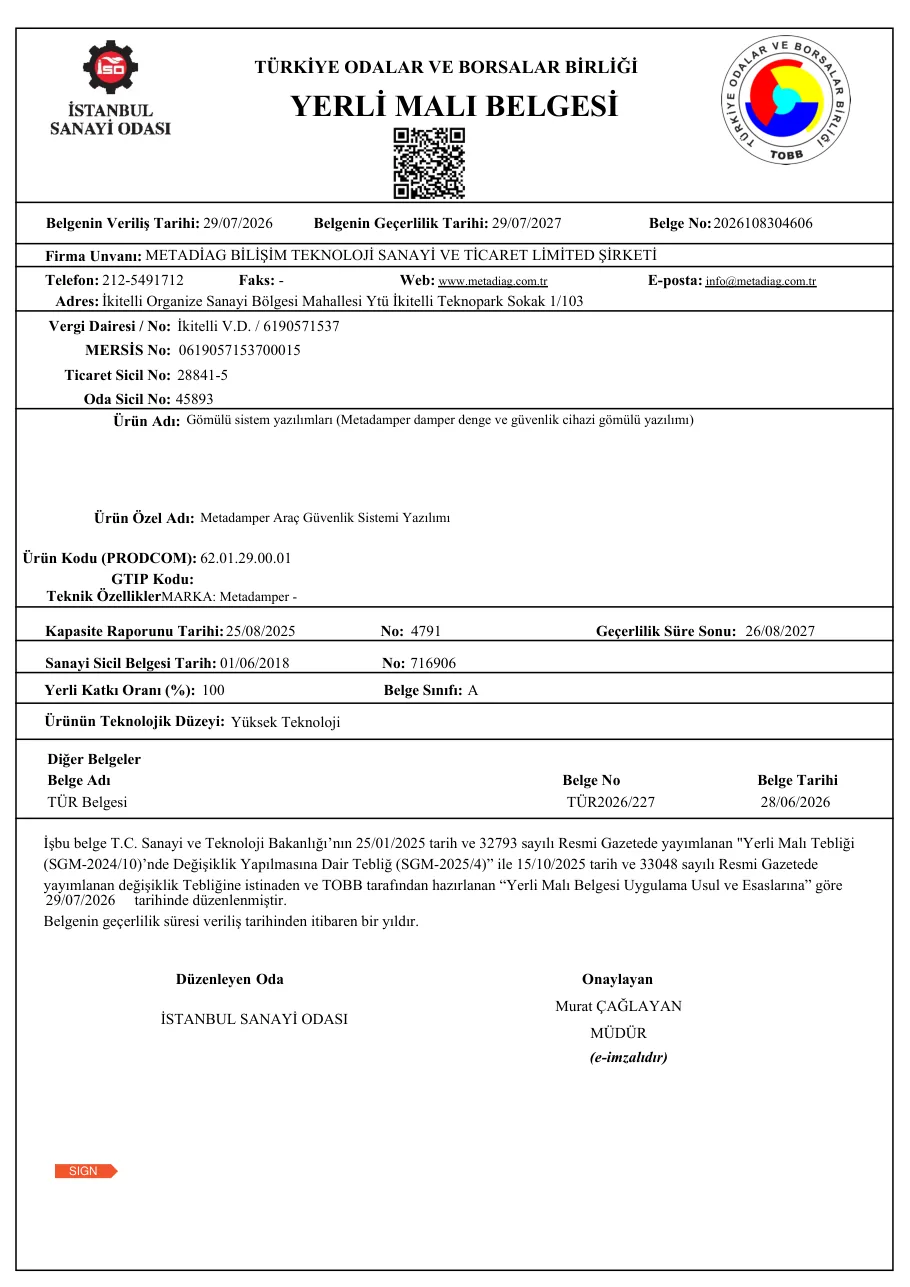
Certificates are issued per product and model. Select one to view it.

Certificates were issued under the company's previous title, Metadiag Bilişim Teknoloji Sanayi ve Ticaret Ltd. Şti.

Installation, warranty and user manual

Installation, calibration and daily checks are described step by step in the manual, which you can download as a PDF.

Who installs it

Metadiag’s technical team, the customer’s technical team or a technically competent person appointed by the customer. The balance module is fixed to the rear centre of the chassis, calibration is done with the vehicle on level ground, and handover follows a controlled function test.

1-year warranty

MetaDamper is warranted against defects in materials and workmanship for 1 year from the date of purchase. Support services are free of charge during the warranty period.

5-year service life

The declared service life is 5 years. Throughout this period, maintenance, repair, service and spare parts are provided by Metadiag.

Part of the ecosystem

MetaDamper decides on the vehicle, without needing an internet connection. With the display package, tipping events and checklists reach the MetaFMS fleet management software. Paired with MetaControl automatic sheeting, the tarp opens as the body rises and closes once the truck moves off.

In the panel

A MetaDamper intervention appears as a live notification on the map; here the event type is “tailgate did not open”.
Connection, tipper and tailgate sensor status and battery level for every MetaDamper unit in one table.
Tipper interventions are listed by type: dangerous angle, tipping while moving, tailgate did not open.

Frequently asked questions

Does the Standard Module apply the 55° combined-angle rule?

No. The Standard Module works with the 5° lateral and 13° longitudinal thresholds. The 55° combined-angle control comes with the wireless body and tailgate sensors in the Wireless Sensors package.

What happens if the body opens on the road?

While the truck is moving, the body cannot rise, and a body left up is stopped and lowered. For this protection, vehicle speed comes from the 4.3″ display or, without a display, from the CAN-GPS data of the Motion Control Module.

How often does MetaDamper step in on site?

In the period summary on one customer’s MetaFMS panel, 279 tipper interventions were recorded across 81 vehicles. Each record is a moment when the body was stopped from rising in a risky condition. In one vehicle’s breakdown for the period, 85 of 107 interventions were “tipper raise blocked on a dangerous slope” and 22 were “tipper blocked due to tailgate jam”. Figures are from a single fleet’s 2026 period summary; fleet and driver details are not shared, and the numbers vary by fleet and period.

Can it be fitted to trucks with pneumatic tipping controls?

Yes. The coil and valve set in the box cuts lifting air and triggers lowering. On trucks with electric lowering, the lower trigger is wired directly.
Does it work on trailers?

Yes. The trailer link cable and socket are included in the Standard Module box.

Can the thresholds be changed?

Yes. Lateral and longitudinal thresholds are set from the unit's Wi-Fi interface for each truck and site. Calibration is done with the truck on level ground, and a check every six months is recommended.

Who installs it?

Metadiag's technical team, the customer's technical team or a technically competent person appointed by the customer. The installation manual is written for each of them.

Does it work with chain-operated tailgates?

The tailgate sensor is not recommended for chain-operated or manual tailgates. All other functions keep working.
What is the warranty?

1 year against defects in materials and workmanship, with free support during the warranty. The declared service life is 5 years.
Does MetaDamper need the internet to make safety decisions?

No. MetaDamper makes its decisions on the vehicle without needing an internet connection. With the display package, tipping events and checklists are sent to MetaFMS.

MetaDamper helps reduce rollover risk; it does not replace the driver's attention and responsibility. Traffic and occupational safety rules and the vehicle manufacturer's instructions still apply.

MetaDamper

Let's start with a few pilot vehicles in your fleet

We plan the survey, installation and reporting around your site. Our team reviews your vehicles and recommends the right configuration.

Products of interest