What is required in earthworks and mining?
In Türkiye, earthworks and mining rules come from three places: the haulage permit and load covering from the excavation waste regulation, extra conditions such as vehicle tracking from municipal permit terms, and site safety from the mining, construction and work equipment regulations. Below we summarise what each rule requires, whom it covers and where it comes from.
Mandatory (law) Covering excavation and construction waste loads, and the haulage permit
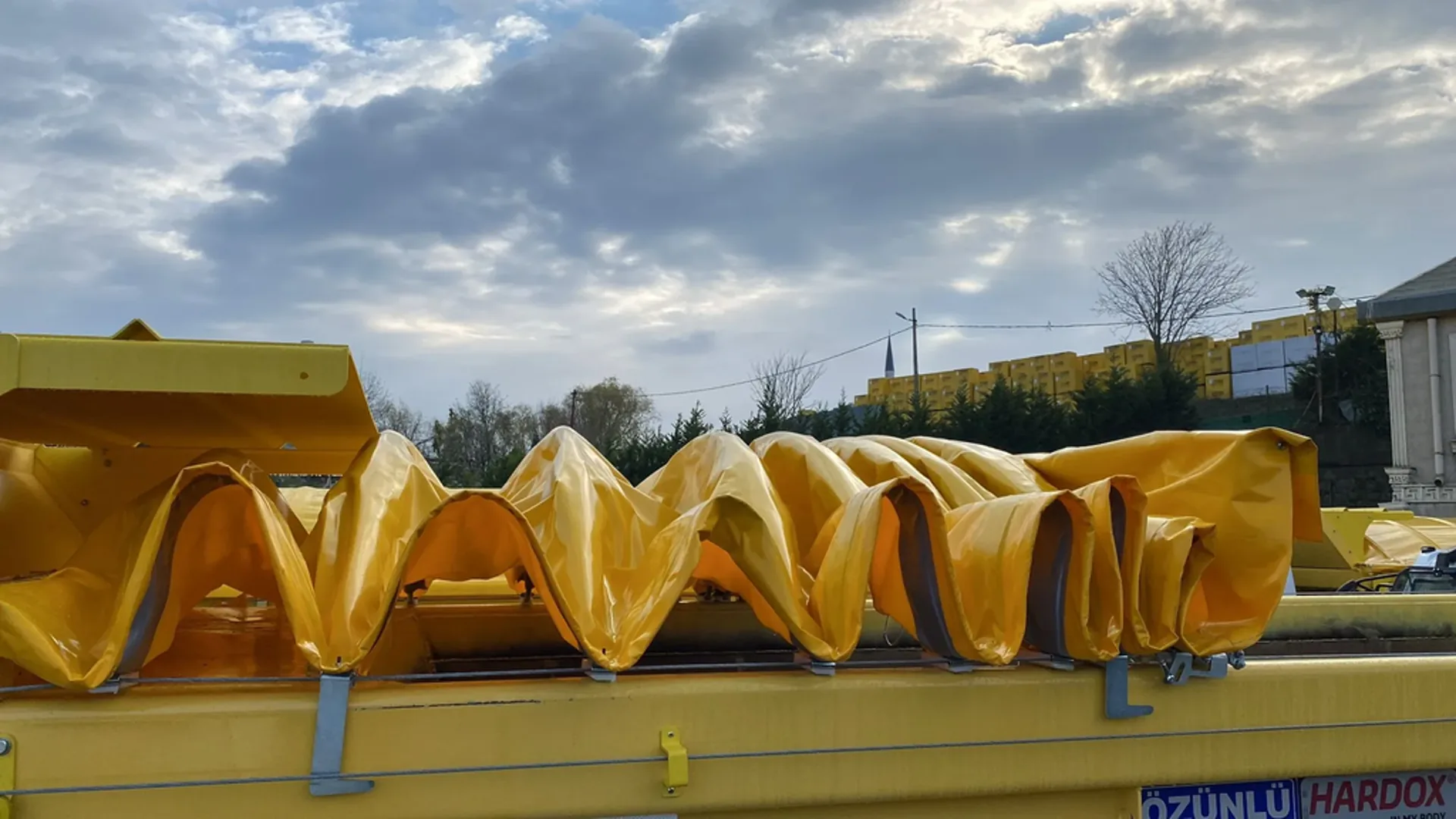
To prevent pollution during haulage, the vehicle body must be covered with suitable material, the vehicle may not be loaded above capacity and its wheels must be cleaned before it joins traffic. Carriers need a haulage permit from the municipality within its jurisdiction, or from the highest local civil authority outside it; construction and demolition waste trucks must be yellow and marked “İnşaat/Yıkıntı Atığı Taşıma Aracı”.
- Applies to
- Vehicles carrying excavation soil and construction or demolition waste
- Dates
- In force
Source: Hafriyat Toprağı, İnşaat ve Yıkıntı Atıklarının Kontrolü Yönetmeliği md. 24–25 (Regulation on the Control of Excavation Soil and Construction and Demolition Waste, Arts. 24–25, Official Gazette 18.03.2004/25406)
By local decision Vehicle tracking device as a haulage-permit condition in some metropolitan municipalities
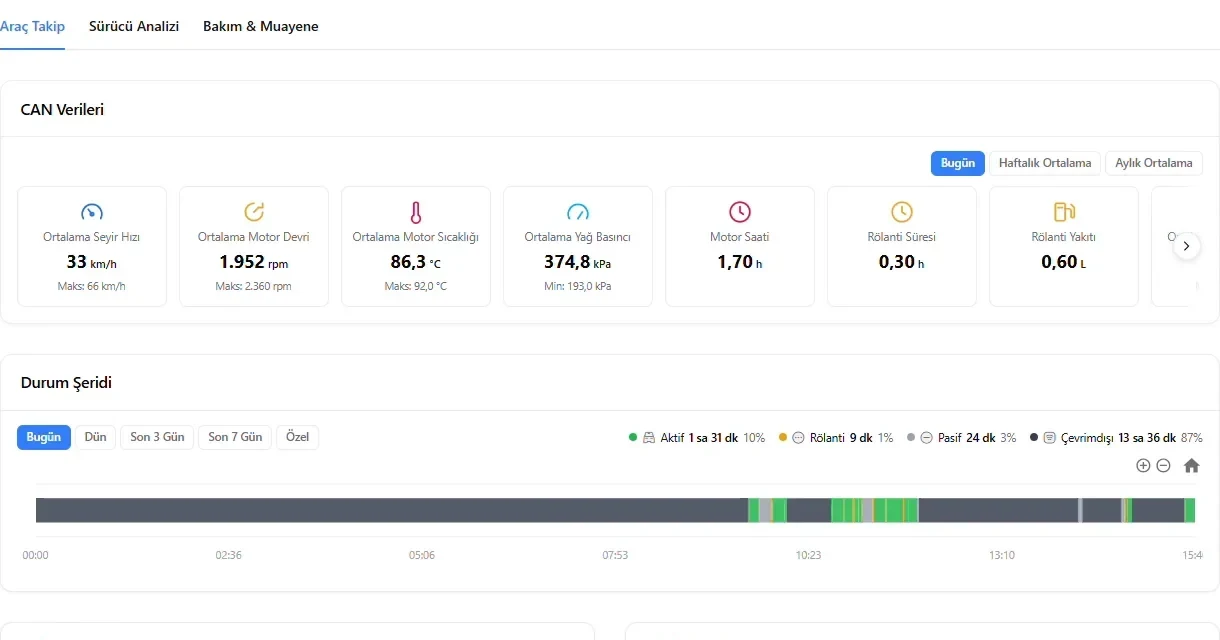
Article 24 of the Turkish excavation waste regulation leaves it to the municipality to set the documents and information required for a haulage permit, and some metropolitan municipalities use this power to add a tracking condition. Examples: in Bursa, a 01.11.2013 decision of the traffic coordination board (UKOME) made it compulsory for excavation trucks to carry a GPS device that is compatible with the municipality's satellite tracking system and sensitive to tipper movements. The Ankara Metropolitan Municipality carrier undertaking (s.ankara.bel.tr/files/1415/6829/3327/Taahhtname.pdf) forbids haulage with vehicles that have no tracking system and any tampering with the tracking device or the body sensor. The device must be compatible with the municipality's own system, and conditions differ from one municipality to another. These are examples; confirm the current condition with the municipality that issues the permit.
- Applies to
- Excavation carriers in metropolitan municipalities that set this condition; verified examples are Bursa and Ankara
- Dates
- Bursa: UKOME decision 01.11.2013/447. Ankara: undertaking form (no date stated). Confirm that they are still current with the municipality.
Outside the scope of Metadiag products
Source: Bursa Büyükşehir Belediyesi, Çevre Kontrol Hizmetleri (Bursa Metropolitan Municipality, environmental control services, section 3-C; UKOME decision 01.11.2013/447)
Mandatory (law) Dumping only at permitted sites, and the waste transport and acceptance document
Excavation soil and construction and demolition waste may not be dumped anywhere other than the recovery and disposal sites designated and permitted by the municipality or the highest local civil authority. The waste producer obtains a four-copy waste transport and acceptance document (Atık Taşıma ve Kabul Belgesi), which is used by the producer, the carrier and the site and shown at inspections. Permits and documents are outside Metadiag's scope.
- Applies to
- Producers of excavation soil, producers of more than 2 tonnes of construction and demolition waste, and carriers
- Dates
- In force
Source: Hafriyat Toprağı, İnşaat ve Yıkıntı Atıklarının Kontrolü Yönetmeliği md. 13 ve 23 (Regulation on the Control of Excavation Soil and Construction and Demolition Waste, Arts. 13 and 23, Official Gazette 18.03.2004/25406)
Mandatory (law) Securing the load
A vehicle may not be loaded, without proper lashing and securing, in a way that lets the load touch the road, fall, spill, scatter, leak, flow, slide, make noise, tip over or unbalance the vehicle. The law sets the outcome, not a method.
- Applies to
- All vehicles carrying a load on public roads, including tipper trucks and trailers carrying soil, aggregate and ore
- Dates
- In force since 27.02.2026
Source: 2918 sayılı Karayolları Trafik Kanunu md. 65/1-h (Turkish Road Traffic Law, Art. 65/1-h, as amended by Law 7574 Art. 18, Official Gazette 27.02.2026/33181)
Mandatory (law) Haul roads, dump-edge barriers and the unloading directive in open pits
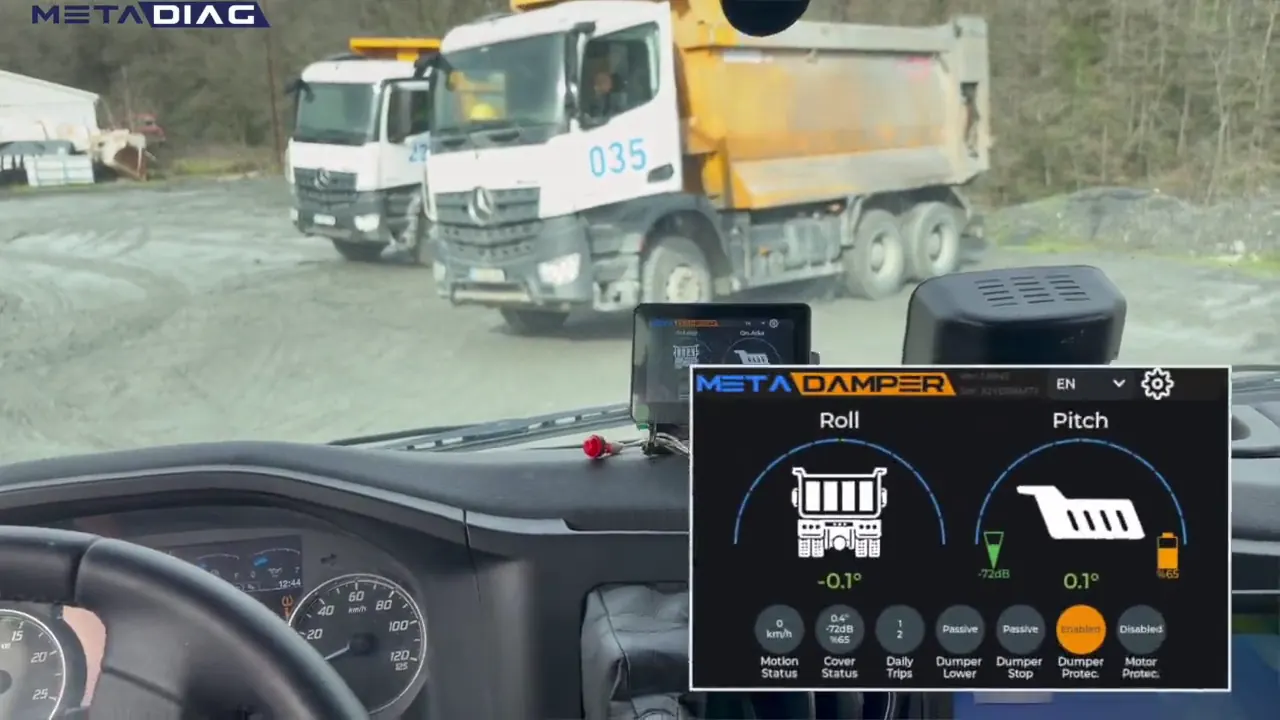
The duty lies with the mine operator, and the Turkish regulation does not require any particular device. In open pits, benches and haul roads must be strong enough for the vehicles used, and safety barriers of sufficient height must be built wherever machines could fall, such as at dumps and benches. Working conditions of machines, manoeuvring areas and the safety measures for loading, hauling and unloading are written into the operator's open-pit directive, and site traffic follows set rules. MetaDamper does not replace the barrier.
- Applies to
- Surface mines and quarries
- Dates
- In force (last amended in Official Gazette 21.07.2026/33316)
Source: Maden İşyerlerinde İş Sağlığı ve Güvenliği Yönetmeliği (Turkish Regulation on Health and Safety in Mines), Annex 1 Art. 8.6, Annex 2 Arts. 1.5, 1.6 and 1.12-e, Official Gazette 19.09.2013/28770
Mandatory (law) Measures at excavation edges against ground slips and vehicles falling in
The duty lies with the employer, and the Turkish regulation does not require any particular device. At trench edges and on steep ground, measures must be taken against ground slips and machines sliding, and protective measures must stop excavation and materials-handling machines and vehicles from falling into excavations or water. The regulation also asks for a signaller and reversing warnings during manoeuvres and a cab that protects the driver if the vehicle overturns; these two are outside Metadiag's scope.
- Applies to
- Construction work, including excavation, cutting and filling
- Dates
- In force (last amended in Official Gazette 31.12.2018/30642)
Source: Yapı İşlerinde İş Sağlığı ve Güvenliği Yönetmeliği (Turkish Regulation on Health and Safety in Construction Work), Annex 4 (B) Part II Arts. 49, 51, 54, 55 and 56, Official Gazette 05.10.2013/28786
Mandatory (law) Roll-over protection, on-site speed limits and periodic checks for mobile machinery
The duty lies with the employer, and the Turkish regulation does not require any particular device. Mobile work equipment that carries an operator must be protected against roll-over, and where the operator's view is restricted, aids that improve visibility are used. Where work equipment moves within a work area, suitable traffic rules and speed limits are set and enforced, and earth-moving machines are subject to periodic checks. The products in this row address only the monitoring of on-site speed limits (Annex II Art. 2.2); roll-over protection, visibility aids and periodic checks are outside Metadiag's scope.
- Applies to
- Employers using mobile work equipment such as excavators, loaders, dozers and off-road dump trucks
- Dates
- In force (last amended in Official Gazette 23.12.2025/33116)
Source: İş Ekipmanlarının Kullanımında Sağlık ve Güvenlik Şartları Yönetmeliği (Turkish Regulation on the Use of Work Equipment), Annex I Arts. 3.1.4 and 3.1.6, Annex II Art. 2.2, Annex III Table 6, Official Gazette 25.04.2013/28628
Mandatory (law) The employer's risk assessment and adapting to technical progress
The employer takes every measure needed for workers' health and safety, provides the necessary tools and equipment and adapts the measures to changing conditions. The prevention principles include adapting to technical progress, and the employer carries out or commissions a risk assessment. The Turkish law does not require any particular device.
- Applies to
- All employers: contractors, mine and quarry operators, carriers
- Dates
- In force
Source: 6331 sayılı İş Sağlığı ve Güvenliği Kanunu (Turkish Occupational Health and Safety Law No. 6331), Arts. 4/1, 5/1 and 10, Official Gazette 30.06.2012/28339
Mandatory (law) Tachograph
Motor vehicles used for carrying goods with a maximum laden mass over 3,500 kg must carry and use a tachograph, and tampering with it is prohibited. A tachograph is a separate type-approved device and is not part of Metadiag's product range.
- Applies to
- Motor vehicles used for carrying goods with a maximum laden mass over 3,500 kg, except those exempted by regulation
- Dates
- Already mandatory for trucks and tractor units before 2026 (Road Traffic Regulation Art. 64/b, Schedule 1). For other vehicles brought into scope by the new wording in force since 27.02.2026, it is not required until the first roadworthiness inspection after these dates, by model year: 2021 and later 31.12.2026; 2016–2020 31.12.2027; 2011–2015 31.12.2028; 1996–2010 31.12.2029; 1985–1995 31.12.2030. Within municipal and adjacent-area boundaries, for commercial passenger vehicles under Laws 5216 and 5393 and official vehicles used to carry goods or passengers, it is not required for vehicles registered for the first time for one year from 27.02.2026.
Outside the scope of Metadiag products
Source: 2918 sayılı Karayolları Trafik Kanunu md. 31 ve Geçici md. 27 (Turkish Road Traffic Law, Art. 31 and Provisional Art. 27, as amended by Law 7574 Arts. 6 and 34, Official Gazette 27.02.2026/33181)