What is required of public transport operators?
Rules on cameras, recorders, vehicle tracking, panic buttons and trip reporting for public transport operators are set out in Türkiye's Road Traffic Regulation, its regulation on vehicle manufacture, modification and fitting, its School Bus Regulation and its Road Transport Regulation; in public tenders, the domestic-goods provisions of Law 4734 also apply. Below we summarise what each rule requires, whom it covers and its official source.
Mandatory (law) Camera and recorder
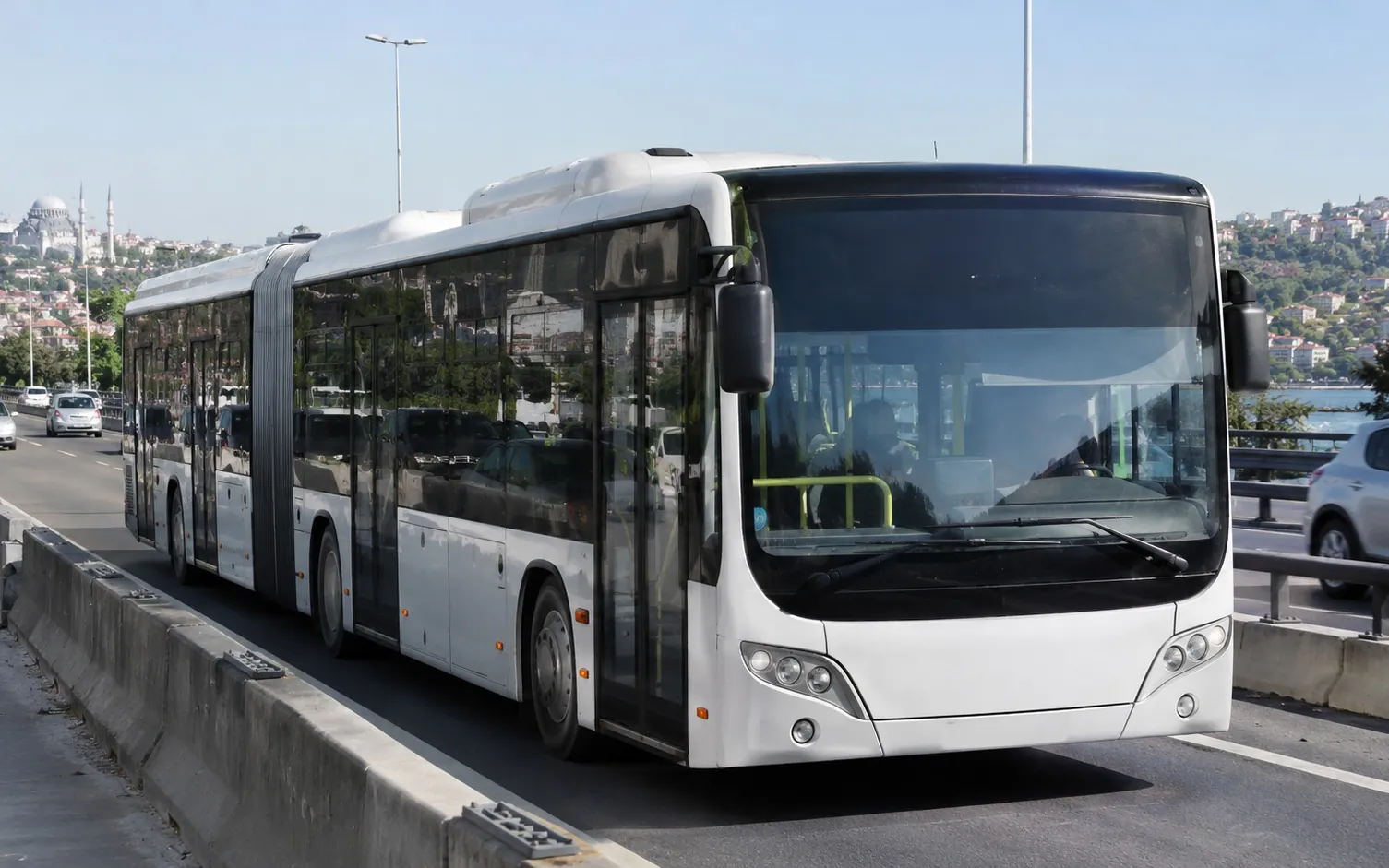
M2 and M3 vehicles in commercial passenger transport and municipal public transport vehicles must have a camera covering the interior (including the driver's seat) and the road ahead, plus a recorder, and recordings must be kept for at least one month. The phase-in timetable and device requirements are detailed on the Buses and coaches page. For this need, MetaVision records four channels in 1080P.
- Applies to
- M2 and M3 vehicles used in commercial passenger transport under Laws 4925, 5216 and 5393, and public transport vehicles owned or authorised by municipalities
- Dates
- New registrations: 30 days after publication on 19.08.2025; existing vehicles: from the first inspection after 01.01.2026, 01.01.2027 or 01.01.2028, depending on model year.
Source: Karayolları Trafik Yönetmeliği (Road Traffic Regulation), Schedule 1 (C) (Official Gazette 29.11.2024/32737) and Provisional Art. 12 (Official Gazette 19.08.2025/32991)
Mandatory (law) Minimum device specifications and device report
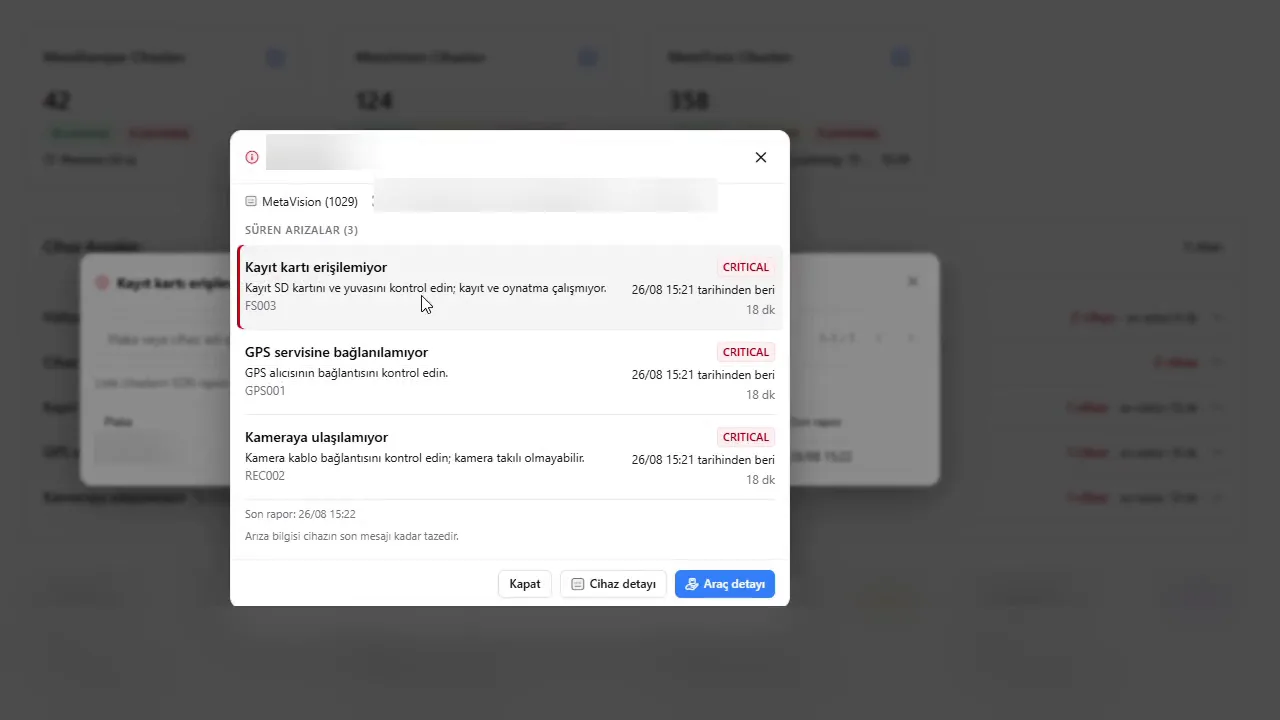
Tracking units, cameras, recorders and panic buttons must meet the minimum specifications in the regulation, and each device needs a fitting-suitability device report, a series-fitting certificate and a series-fitting conformity report. Details are on the Buses and coaches page.
- Applies to
- M1, M2 and M3 vehicles fitted with a tracking system, cameras, a recorder and panic buttons
- Dates
- In force since 18.02.2025
Outside the scope of Metadiag products
Source: Araçların İmal, Tadil ve Montajı Hakkında Yönetmelik (Regulation on vehicle manufacture, modification and fitting), Annex VI 4.1 (Official Gazette 18.02.2025/32817); Road Traffic Regulation, Additional Art. 4/2 (Official Gazette 29.11.2024/32737)
By local decision Vehicle tracking system and emergency button (by local decision)
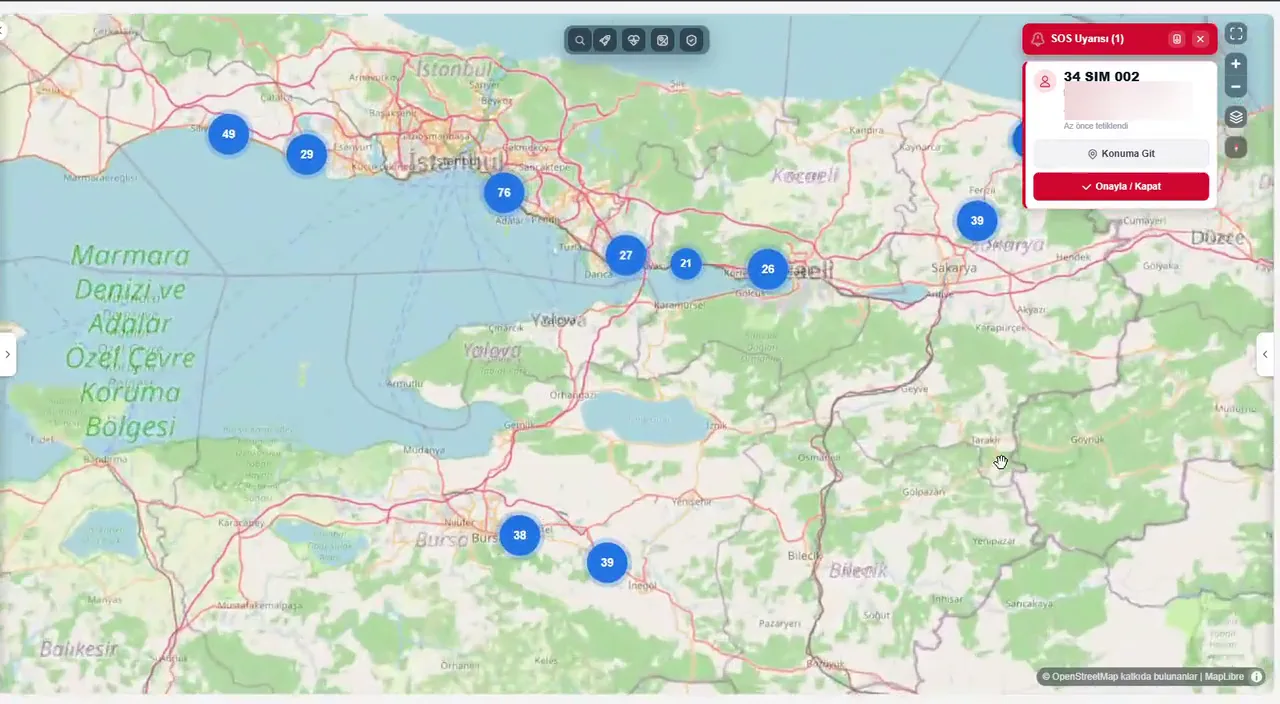
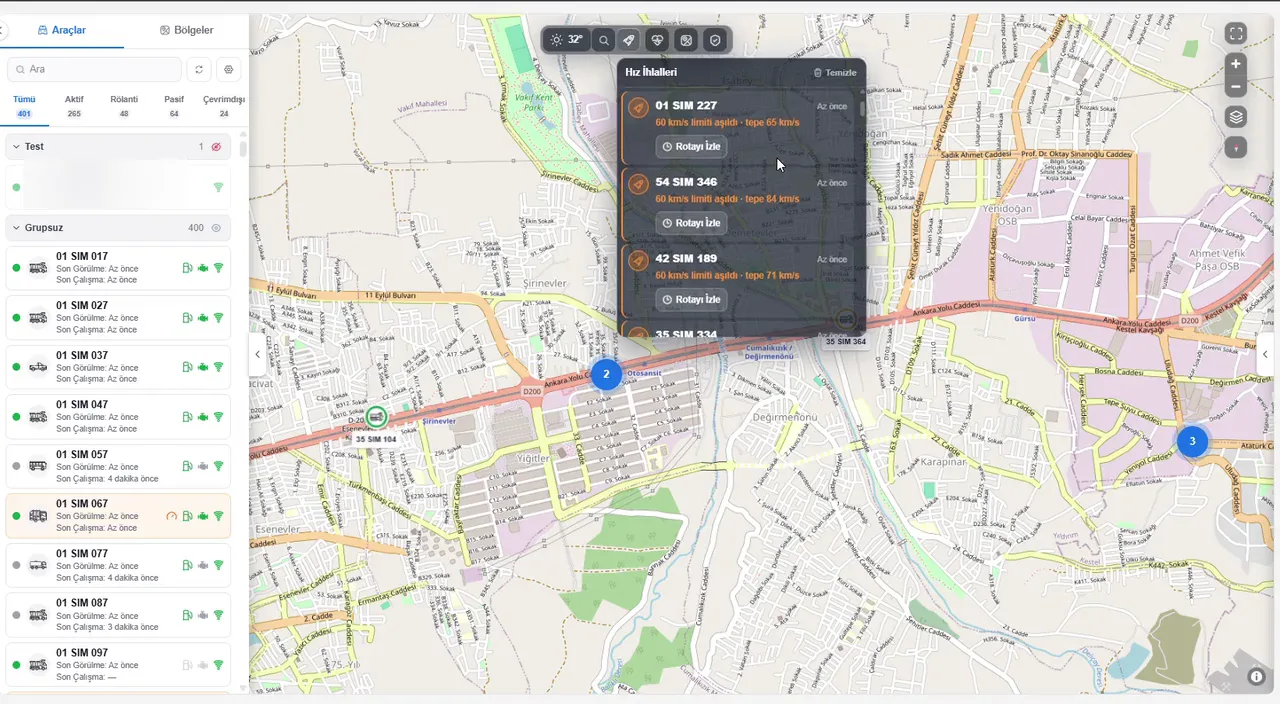
For all or selected vehicles operating under Laws 5216 and 5393, a vehicle tracking system and emergency button may be required by decision of the local transport coordination board (UKOME) or the provincial traffic commission. The Ministry of Interior may also impose this nationwide. For this need, MetaTrack collects location and vehicle data, and the panic button connected to MetaVision raises an emergency alarm in MetaFMS. The control centre that receives the device data is designated by the Ministry of Interior (AİTM Annex VI 4.1.7); MetaFMS does not replace it.
- Applies to
- Vehicles operating under Laws 5216 and 5393 (those named in the local decision)
- Dates
- Date set in the local decision
Source: Karayolları Trafik Yönetmeliği (Road Traffic Regulation), Additional Art. 4/1 (added in the Official Gazette of 29.11.2024/32737)
By local decision Copying camera recordings to an IP address
UKOME or the provincial traffic commission may decide how much of the camera footage is copied automatically to an IP address, and under which conditions. Check the decisions of your UKOME or provincial traffic commission to see whether such a rule applies to your vehicles.
- Applies to
- Passenger vehicles subject to the camera and recorder requirement, where a local decision applies
- Dates
- Date set in the local decision
Outside the scope of Metadiag products
Source: Karayolları Trafik Yönetmeliği (Road Traffic Regulation), Schedule 1 (C), camera and recorder entry (Official Gazette 29.11.2024/32737)
Mandatory (law) Tracking, cameras and data sharing on school buses
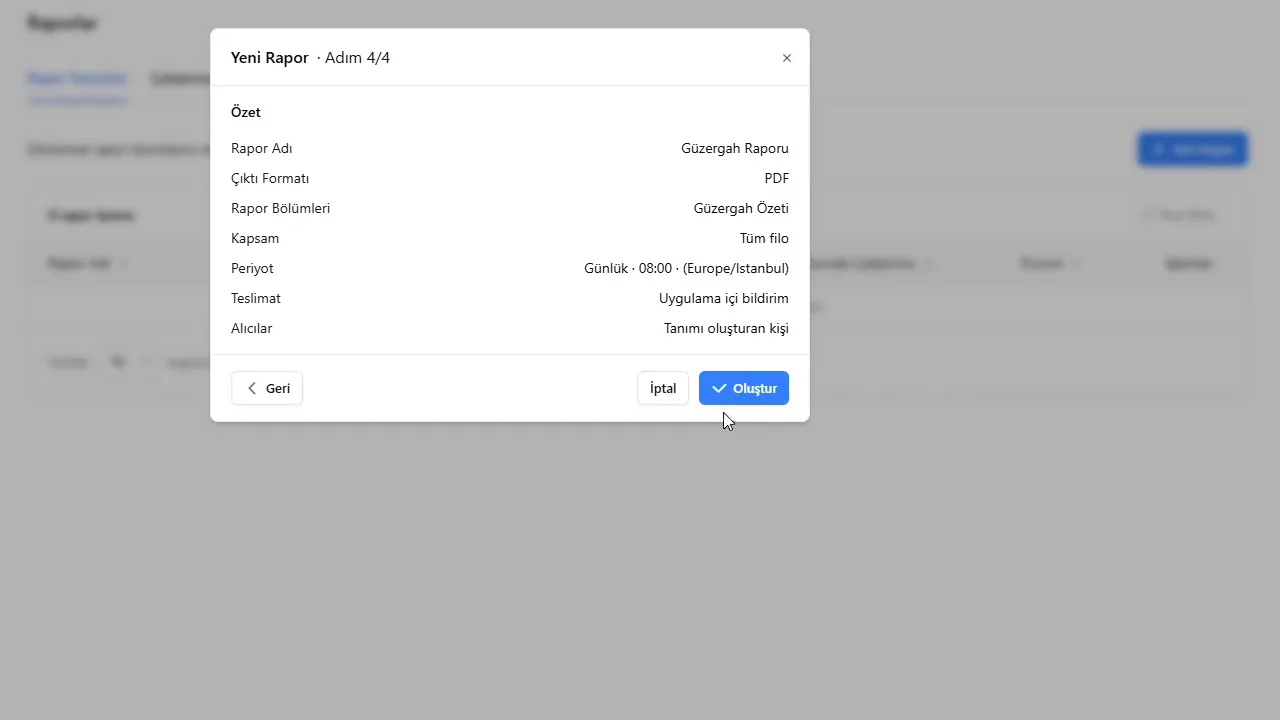
School buses must have a vehicle tracking system that keeps at least 30 days of records. A camera system covering every seat, inside and outside the vehicle, is required in line with the Road Traffic Regulation and the fitting regulation (AİTM). Tracking data is shared on request with the school, the police and parents. For this need, MetaTrack collects location data, and MetaFMS produces a route report per vehicle that can be exported.
- Applies to
- All school bus operators and school buses
- Dates
- In force. Seat belts and seat sensors are phased in: 2017 models 01.07.2029, 2016 models 01.07.2028, 2015 and older 01.07.2027. Vehicles registered between 18.02.2025 and 01.10.2025 with cameras fitted to the earlier specification may keep them until the first inspection after 31.12.2027.
Source: Okul Servis Araçları Yönetmeliği (School Bus Regulation), Art. 4/1-ı, 4/1-m, 5/2-g and Provisional Art. 2 (Official Gazette 25.10.2017/30221, last amended 19.08.2025/32991); Road Traffic Regulation Provisional Art. 13
Mandatory (law) Plate and tracking data to U-ETDS for each trip
Holders of A1, A2, B2 and D2 authorisations on occasional, group and shuttle trips send the vehicle's plate and tracking-system (ATS) data, together with crew and passenger details, to the U-ETDS system of the Ministry of Transport and Infrastructure no later than 1 hour before departure (2 hours for trips starting at an airport). Holders of A1, B1 and D1 authorisations send the same data for scheduled services before the trip starts. U-ETDS reporting is not among the features of Metadiag products; the authorisation holder files it.
- Applies to
- Holders of A1, A2, B1, B2, D1 and D2 authorisations: intercity coach companies, occasional and group operators, and shuttle operators running beyond municipal limits (school services included)
- Dates
- Tracking (ATS) data has been required since 01.01.2024.
Outside the scope of Metadiag products
Source: Karayolu Taşıma Yönetmeliği (Road Transport Regulation), Art. 40/3–4 and Provisional Art. 2/1-c (Official Gazette 08.01.2018/30295, last amended 16.05.2026/33255)
Mandatory (law) Tachograph
Vehicles with more than 17 seats including the driver, used for passenger transport under Laws 5216, 5393 or 4925, must use a tachograph and driver card. The rule also covers urban services, and tampering carries a heavy administrative fine. A tachograph is a separate type-approved device and is outside the Metadiag product range.
- Applies to
- Motor vehicles with more than 17 seats including the driver, used for passenger transport under Laws 5216, 5393 or 4925; vehicles built before Law 2918 entered into force and vehicles exempted by regulation are excluded
- Dates
- In force since 27.02.2026. For vehicles brought into scope by the new wording, it is not required until the first inspection after these dates, by model year: 2021 and later 31.12.2026, 2016–2020 31.12.2027, 2011–2015 31.12.2028, 1996–2010 31.12.2029, 1985–1995 31.12.2030. Within municipal and adjacent-area boundaries, for commercial passenger vehicles under Laws 5216 and 5393 and official vehicles used to carry goods or passengers, it is not required for vehicles registered for the first time for one year from 27.02.2026 (Provisional Art. 27).
Outside the scope of Metadiag products
Source: 2918 sayılı Karayolları Trafik Kanunu md. 31 ve Geçici md. 27 (Turkish Road Traffic Law, Art. 31 and Provisional Art. 27, as amended by Law 7574 Arts. 6 and 34, Official Gazette 27.02.2026/33181)
Mandatory (law) Monitoring drivers' working hours and rule breaches
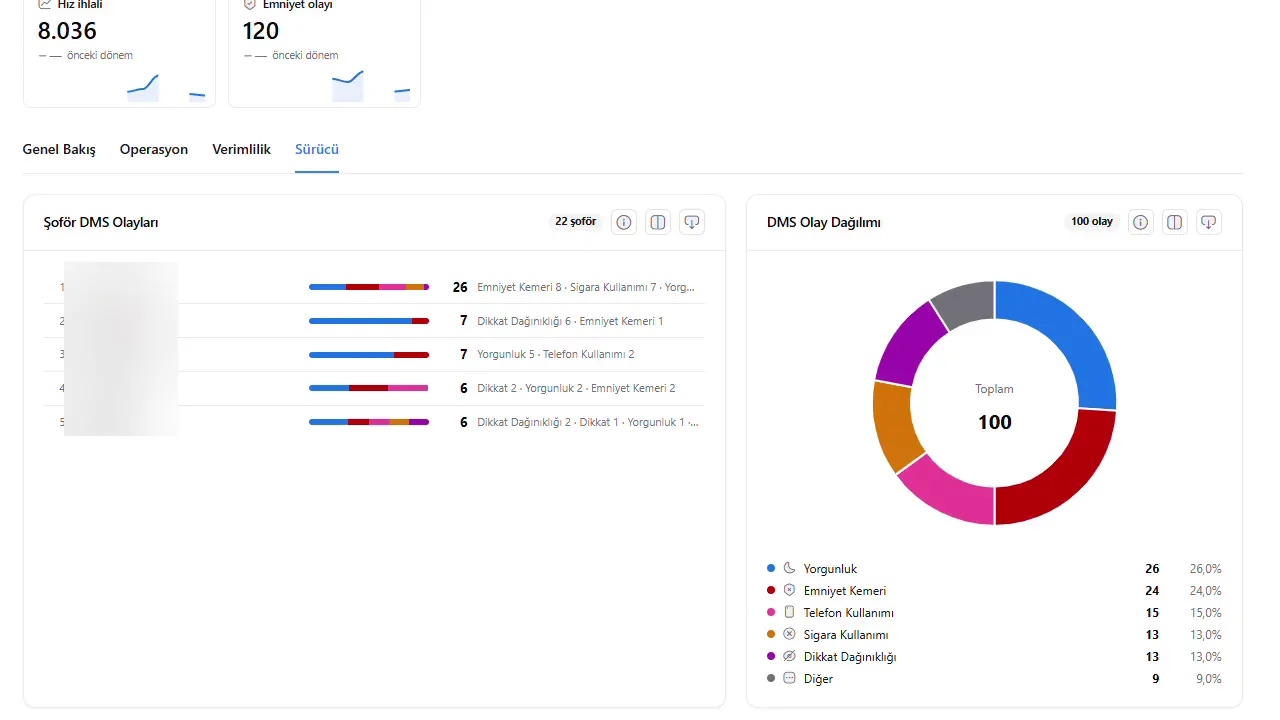
Managers of goods and passenger transport companies must monitor drivers' working hours and any rule breaches during those hours, train drivers who habitually break the rules and take preventive measures. For this need, MetaVision detects and records driver violations, and MetaFMS lists them per driver and uses a risk score to show training priorities. Driving and rest times are recorded by the tachograph.
- Applies to
- Operators of goods and passenger vehicles, including bus, minibus and shuttle operators
- Dates
- In force
Source: Karayolları Trafik Yönetmeliği (Road Traffic Regulation), Art. 98 (B)(a)(4) (as amended, Official Gazette 02.09.2004/25571)
Mandatory (law) R10 report or EMC CE for retrofitted electronics
Every electrical or electronic device fitted afterwards to vehicles carrying 9 or more passengers, or to school buses, needs a technical-service report showing UN R10 conformity or a CE mark under the EMC Regulation. For devices with an immunity-related function under R10 para. 2.12, CE is not enough. When you buy a camera, tracking unit or fan conversion, ask for this document in writing.
- Applies to
- Vehicles carrying 9 or more passengers besides the driver (M2, M3) and school buses
- Dates
- In force
Outside the scope of Metadiag products
Source: Araçların İmal, Tadil ve Montajı Hakkında Yönetmelik (Regulation on vehicle manufacture, modification and fitting), Annex XIV 3 and Annex XII 4.7
Public tender specification Domestic-goods price advantage and R&D product certificate in public tenders
In tenders run by municipalities and public operators, goods offered with a domestic-goods certificate may be given a price advantage of up to 15%; the 15% is mandatory for medium-high-tech goods on the Ministry's list and for domestic software. A TÜR Experience Certificate issued for an R&D product can be used as a document showing work experience for five years from market launch (Art. 10/f). For this need, MetaVision holds a class A hardware domestic-goods certificate (95.87%), 100% for software and certificate TÜRD2026/85. MetaTrack holds a class B hardware domestic-goods certificate (87.85%), 100% for software and certificate TÜRD2026/84. MetaCooler's software certificate is 100%; its hardware certificate application is in progress.
- Applies to
- Municipal public transport operators and public bodies buying through tenders under Law 4734
- Dates
- In force
Source: Kamu İhale Kanunu No. 4734 (Public Procurement Law), Arts. 10 and 63/1-c; Domestic Goods Communiqué SGM-2024/10