All products Decision layer Data collection Trip Counting Module
Active safety and control
Engine and thermal management

Solutions Heavy vehicles

Heavy vehicle rules and operational needs in Türkiye

Bring CAN bus data, the driver camera and maintenance tracking for your truck, tractor and trailer fleet onto one screen. See idling, fuel movements and fault codes before they turn into cost.

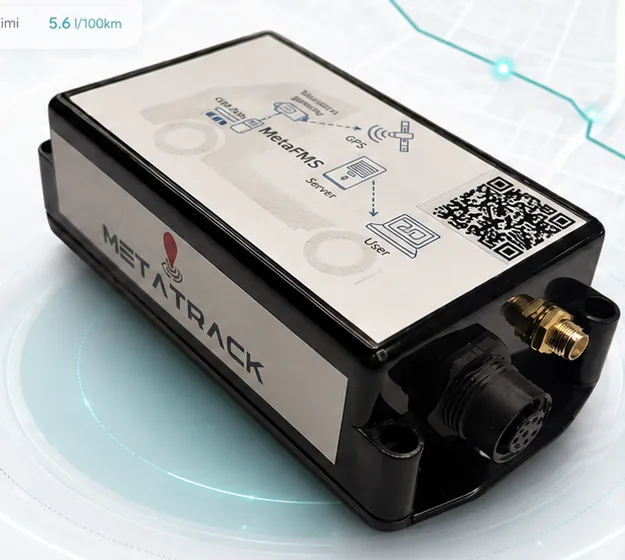
MetaTrack vehicle tracking and CAN bus device
150+CAN parameters: fuel, payload, fault codes, AdBlue, engine hours and more
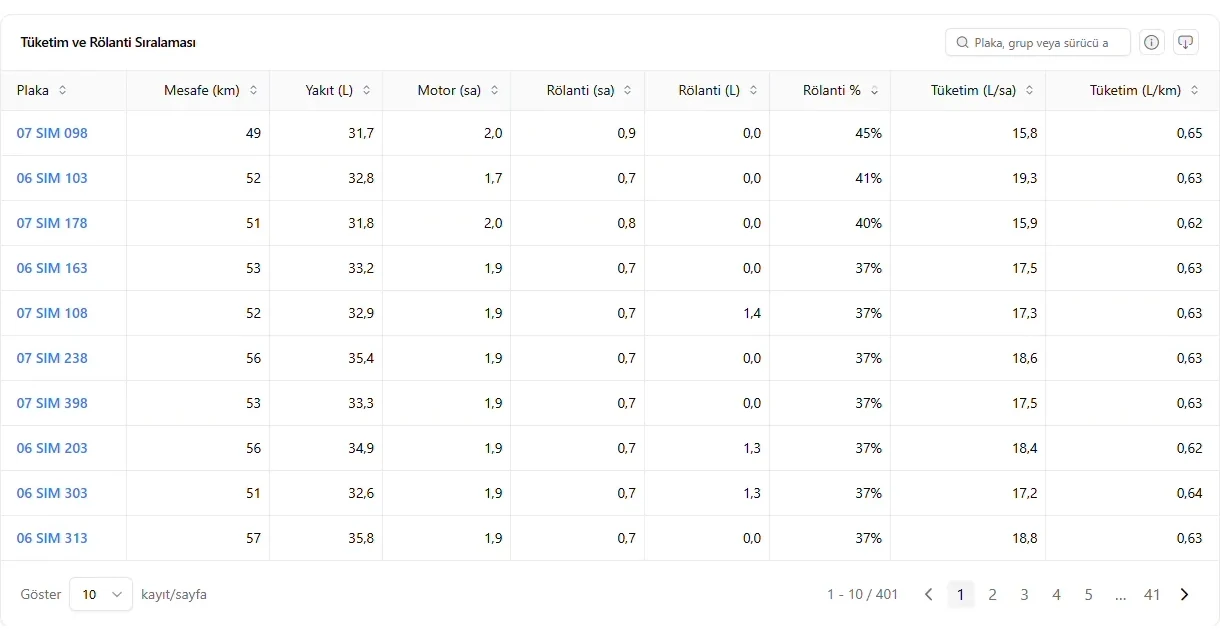
0.9 hIdling measured on one vehicle in one day on the test panel: 45% of 2.0 running hours (simulated data)
4 × 1080PFull HD camera channels, with up to 60 days of recording on up to 512 GB of internal storage
6Driver behaviour classes: fatigue, distraction, phone, smoking, speed and seat belt
Vehicles covered
  • Vehicle category (UN/EU classification): N2
  • Vehicle category (UN/EU classification): N3
  • Vehicle category (UN/EU classification): O3
  • Vehicle category (UN/EU classification): O4
  • Rigid trucks (N2, N3)
  • Tractor units
  • Curtain-side trailers
  • Tipper trailers (details on the tipper truck page)
  • Concrete mixers (with the Trip Counting Module)
  • Heavy commercial vehicles with hydrostatic fans

What is mandatory for these vehicles?

We have summarised the main legal duties for trucks, tractors and trailers in plain language. Each item shows the official source, the dates in force and phase-in, and the Metadiag products that can be used for this need. Duties that no Metadiag product covers are listed for information.

Mandatory (law)

Tachograph

Motor vehicles used to carry goods with a maximum laden mass over 3,500 kg must be fitted with and use a tachograph. Tampering with it carries heavy administrative fines. A tachograph is a separate type-approved device; a vehicle tracking system does not replace it.

Applies to
Motor vehicles used to carry goods with a maximum laden mass over 3,500 kg (trailers are not covered); vehicles built before Law 2918 entered into force and vehicles exempted by regulation are excluded
Dates
The new wording has been in force since 27 Feb 2026. For vehicles brought into scope by the new wording, transitional Art. 27 does not require the tachograph until the first inspection after these dates, by model year: 2021 and later 31 Dec 2026, 2016–2020 31 Dec 2027, 2011–2015 31 Dec 2028, 1996–2010 31 Dec 2029, 1985–1995 31 Dec 2030. Within municipal and adjacent-area boundaries, for commercial passenger vehicles under Laws 5216 and 5393 and official vehicles used to carry goods or passengers, it is not required for vehicles registered for the first time for one year from 27 Feb 2026.
Outside the scope of Metadiag products
Source: 2918 sayılı Karayolları Trafik Kanunu md.31 and Geçici md.27 (Road Traffic Law, Art. 31 as amended by Law 7574, Art. 6, and transitional Art. 27 added by Law 7574, Art. 34)

Mandatory (law)

Securing and covering the load

A load may not be loaded without proper lashing and securing in a way that lets it touch the road, fall, spill, scatter, seep, leak, slide, make noise or tip over. The rule does not prescribe a method; for bulk and loose loads, a cover is one of the ways to keep the load from scattering. The fine is TRY 3,000, or TRY 20,000 for dangerous-goods and container vehicles, and the vehicle may not continue until the load is made safe.

Applies to
All vehicles, loaded or empty, including trailers
Dates
New wording in force since 27 Feb 2026
For this need

Source: 2918 sayılı Karayolları Trafik Kanunu md.65/1-h (Road Traffic Law, Art. 65/1-h, as amended by Law 7574, Art. 18)

Manufacturer duty (type approval)

Advanced driver safety systems (GSR2)

Type approval of new N2 and N3 vehicles requires systems such as intelligent speed assistance, driver drowsiness and attention warning, blind-spot and moving-off information, tyre pressure monitoring, emergency braking and lane departure warning. This is the vehicle manufacturer's type-approval duty; it is not retroactive to vehicles already registered and does not require retrofitting.

Applies to
New N2 and N3 vehicles (manufacturer). Emergency braking and lane departure warning do not apply to some groups, such as vehicles with more than 3 axles, off-road (G) and special-purpose vehicles, and N2 semi-trailer tractors of 3.5–8 t.
Dates
For systems such as intelligent speed assistance, drowsiness warning, blind-spot and moving-off information, tyre-pressure monitoring and reversing detection, new types from 6 Jul 2022 and all new heavy vehicles from 1 Jan 2025. Advanced distraction warning (ADDW): new types 7 Jul 2024, all new vehicles 7 Jul 2026. Event data recorder and direct vision: new types 7 Jan 2026, all new vehicles 7 Jan 2029.
Outside the scope of Metadiag products
Source: Motorlu Araçlar ve Römorkları ile Bunlar İçin Tasarlanan Aksam, Sistem ve Ayrı Teknik Ünitelerin Genel Güvenliği ve Korunmasız Karayolu Kullanıcılarının ve Yolcuların Korunması ile İlgili Tip Onayı Yönetmeliği (AB/2019/2144), md.6, md.9 and Ek-II (Turkish General Safety Regulation, transposing EU 2019/2144)

Where does cost leak in a heavy-vehicle fleet?

On long-haul and site runs, fuel, idling, faults and driver behaviour often stay invisible until the vehicle is back.

Distance, fuel, engine hours, idling time and consumption ranked by vehicle

The engine runs, no work gets done

Time spent idling shows up as fuel and engine hours on the bill, but never in manual logs.

With MetadiagMetaTrack reports idling by vehicle and by day. In MetaFMS, vehicles are ranked by distance, fuel, engine hours, idling time and consumption, and the share of idling in running time shows vehicle by vehicle.

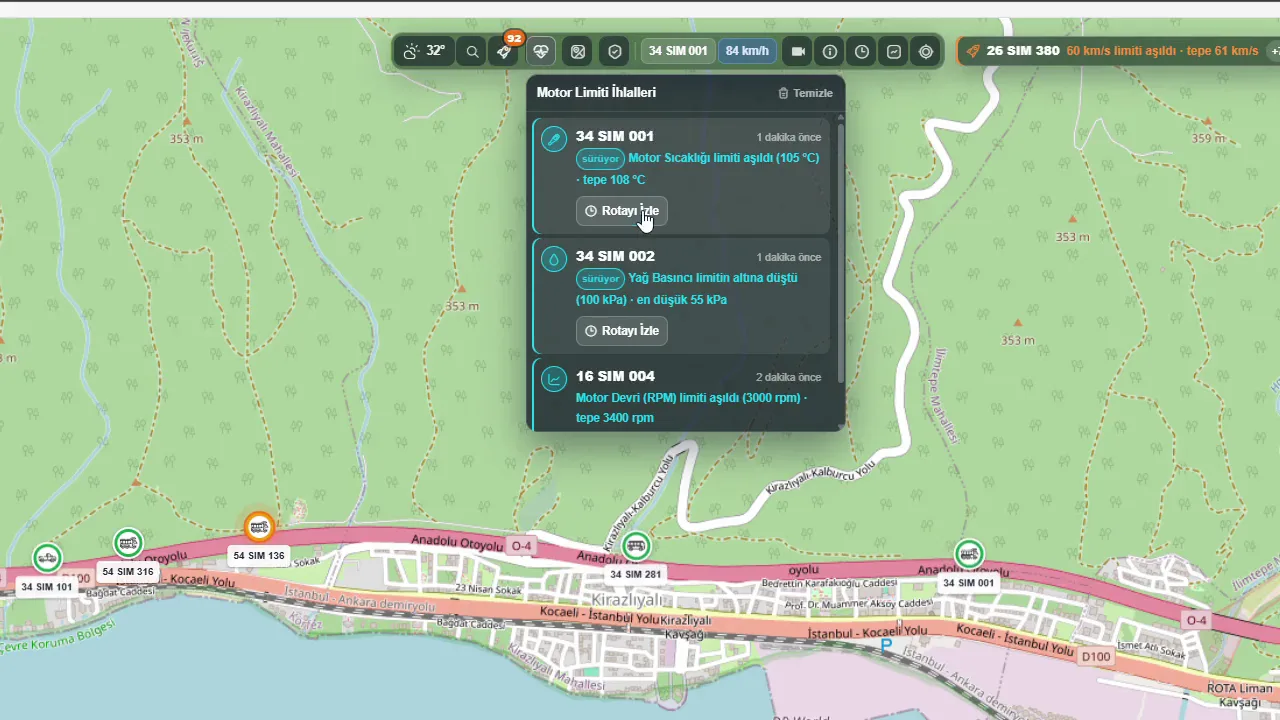
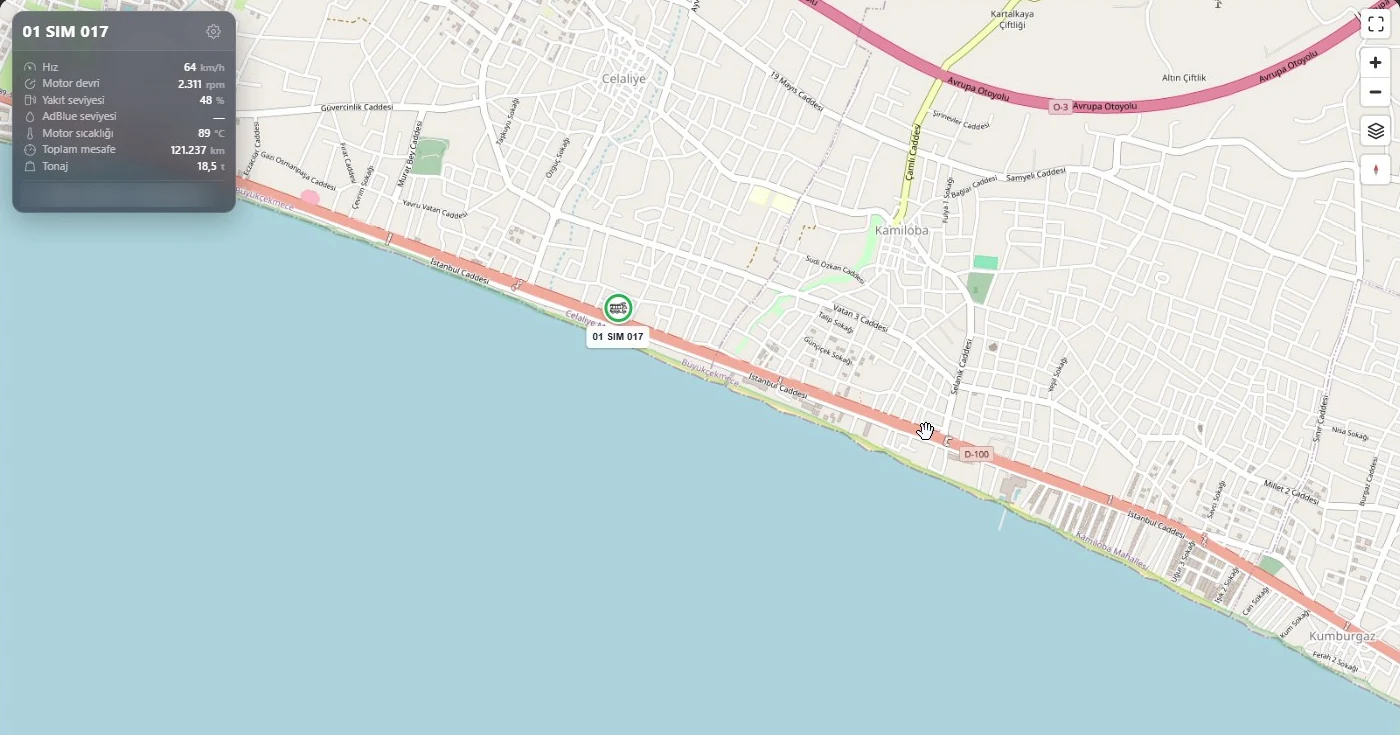
Live telemetry card on the map: speed, engine speed, fuel level, engine temperature, total distance and tonnage

Fuel and payload cannot be tracked

When refuelling, consumption and payload sit in different places, an abnormal drop or an inefficient trip is hard to spot in time.

With MetadiagMetaTrack reads total fuel and payload data from the CAN bus. MetaFMS shows refuels, fuel level and payload on an intraday time chart.

Engine temperature, oil pressure and engine speed limit alerts

Fault codes and AdBlue are noticed too late

When maintenance is tracked on paper, fault codes, low AdBlue and inspection dates come up only once the vehicle stops.

With MetadiagAdBlue level, fault codes and engine hours read by MetaTrack and MetaVision become maintenance and fault alerts in the MetaFMS Maintenance module.

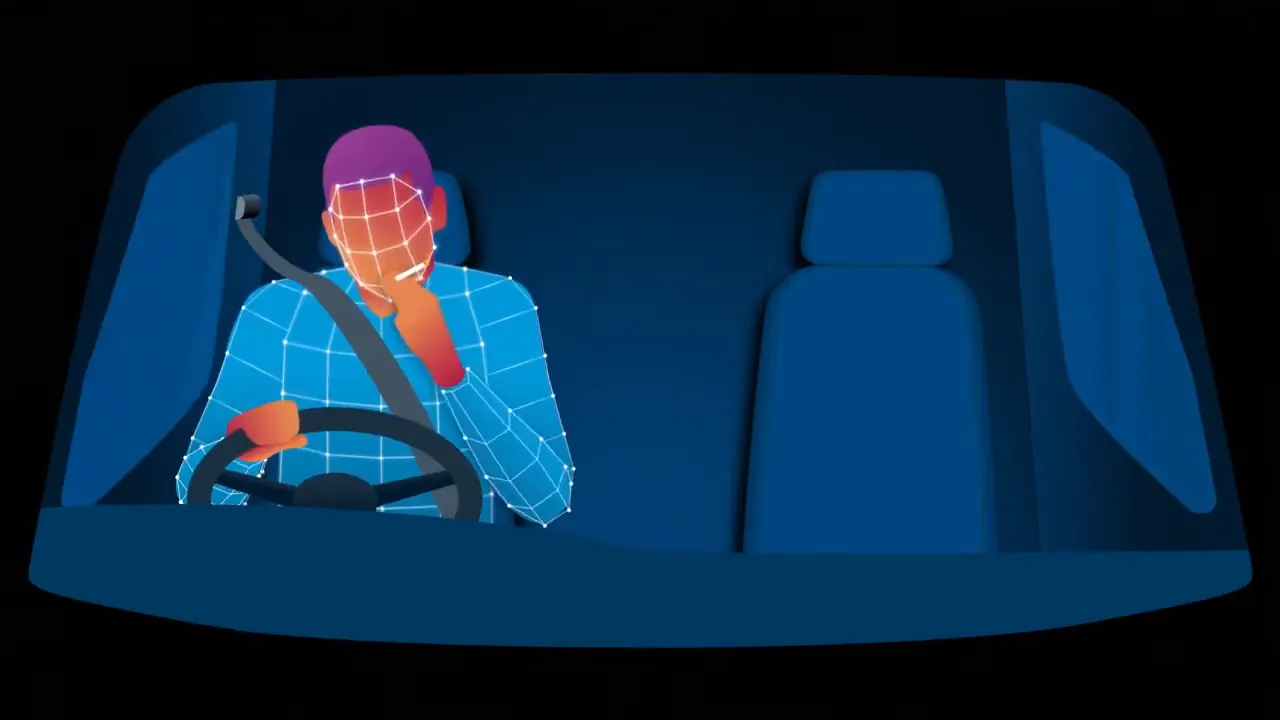
Illustration of a driver in the cab with an analysis mesh over face and body, holding a cigarette in one hand

Fatigue and phone use on long hauls

On drives that last for hours, fatigue, distraction and phone use are among the biggest risks, and they stay unseen until the vehicle returns.

With MetadiagMetaVision uses AI to detect fatigue, distraction, phone use, smoking, speeding and seat belt violations, warns the driver by voice and sends an alarm to MetaFMS.

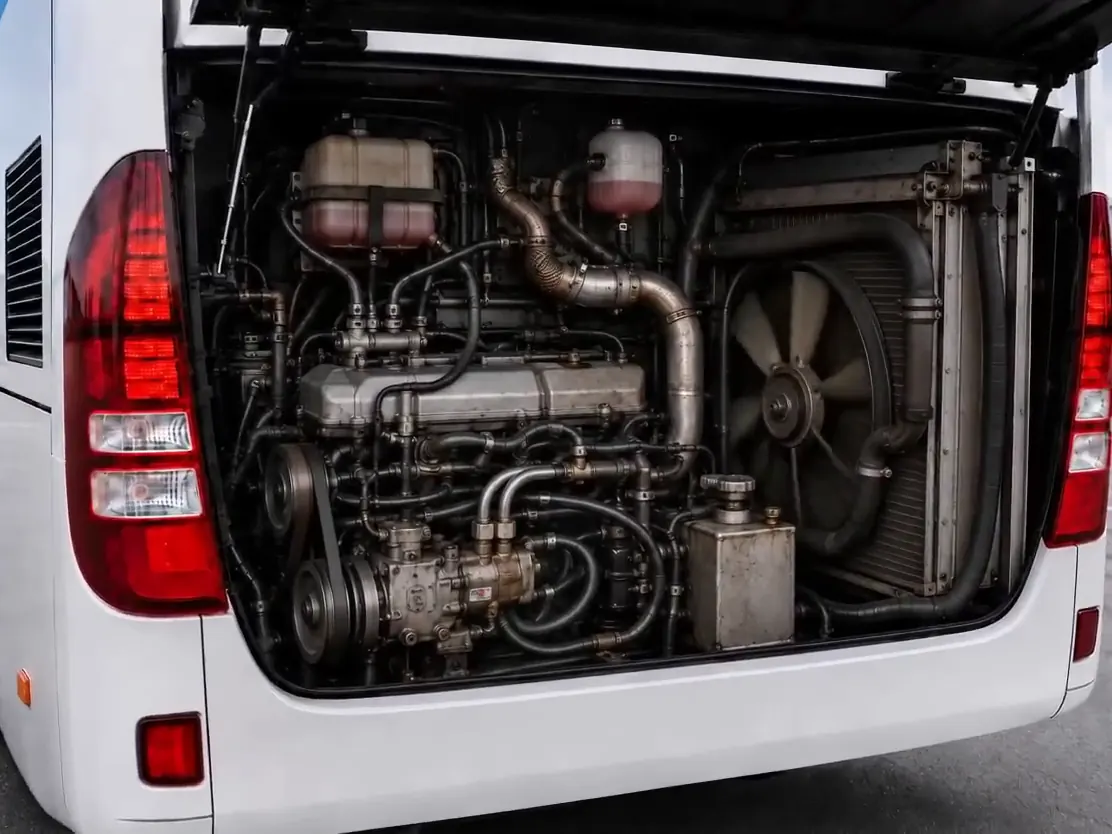
Open rear engine bay of a bus: engine, hoses and a hydrostatically driven fan in front of the radiator

The hydrostatic fan is a constant load

In a hydrostatic fan system, pressurised oil runs close to hot surfaces; if the control signal is lost, the fan spins at full speed even on a cold engine.

With MetadiagMetaCooler runs the fans only as much as needed, in PWM steps, using the vehicle's CAN/J1939 data; removing the hydrostatic oil circuit reduces leak-related risk points.

Frequently asked questions

Can vehicle tracking replace a tachograph?

No. A tachograph is a separate, type-approved device defined by law and is mandatory on goods motor vehicles over 3,500 kg, following the model-year schedule in transitional Art. 27. The MetaTrack J1939 tracker and MetaFMS support fleet management with location, idling, fuel and CAN data; they do not meet the tachograph duty. Metadiag does not offer a tachograph.

Under GSR2, do I have to retrofit systems to my existing truck?

GSR2 is a type-approval duty placed on manufacturers for new vehicles; it is not retroactive to vehicles already registered. Aftermarket systems such as MetaVision driver fatigue monitoring can be used for a fleet's driver safety needs, but they do not replace the GSR2 duty.

How is a driver camera used under data protection law (KVKK)?

MetaVision, MetaTrack and the MetaFMS fleet management platform offer features that support the customer's KVKK compliance, such as role-based access and retention periods. For principles such as a legitimate and specific purpose, proportionality, notice and retention in camera and location tracking, we recommend working with your own legal team.

Does it work on different truck and tractor brands?

Metadiag systems are retrofitted regardless of brand. MetaTrack and MetaVision read data from the vehicle's CAN bus/J1939; which data can be read depends on the vehicle's CAN set-up and is confirmed during the site survey.

Heavy vehicles

Let's start with a few pilot vehicles in your fleet

Tell us how many vehicles you run and how you use them, and we will work out the right product set and installation plan with you.

Products of interest